Tag: prosperity

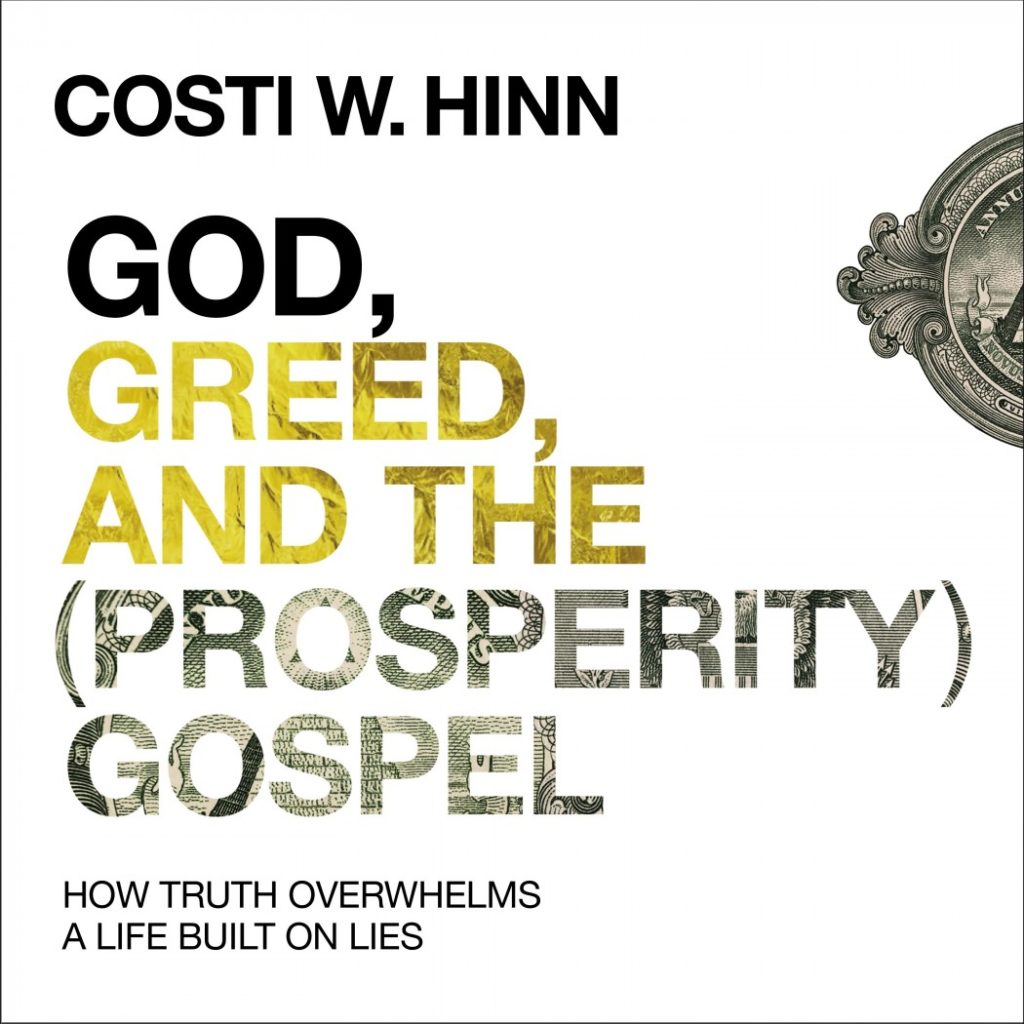
  • Book Review of God, Greed, and the (Prosperity) Gospel

    Book Review of God, Greed, and the (Prosperity) Gospel

    Costi Hinn. God, Greed, and the (Prosperity) Gospel.  Grand Rapids, MI, USA: Zondervan, 2019, 223 pp.

    Introduction

    “The prosperity gospel is a disease” (178)

    Costi Hinn ends a chapter entitled “A Dangerously Abusive Theology” in his 2019 autobiographical salvo against the Prosperity Gospel with that statement. Throughout this book, Hinn weaves together stories, theology, biblical exposition, and exhortation. In doing so, Hinn answers the question, “So why did you walk away from that life?” (18) 

    Zondervan published Hinn’s book, and they released it in 2019. It comes with endorsements from a number of evangelical pastors, leaders, and scholars — from Steven Lawson to Conrad Mbewe.

    The book contains eleven chapters along with a preface and two appendices. Below is a brief summary of each chapter.

    Summary

    The preface answers the question “why.” Why did Hinn feel compelled to write the book. Hinn also addresses this question in an FAQ in Appendix 1. In sum, Hinn wants to address the “gospel injustice” that Prosperity Gospel (PG) teaching brings (18).

    Chapter One

    Chapter one is a brief biography of the Hinn family. Hinn traces their roots to a mix of Middle Eastern culture and Greek Orthodox religion. He comments that the language of his grandfather’s home was Arabic. He also mentions that while being “staunchly” Greek Orthodox, the religion played more of cultural role than a spiritual one. His family emigrated to North America (Toronto, Canada) in 1968. Hinn’s father’s and uncle’s classmates often bullied them because of their lack of English language skills. The Hnn family adopted the teachings of Kathryn Kuhlman whose mantra, “Don’t grieve the Holy Spirit.” (27). Hinn’s uncle, Benny Hinn, began a teaching and healing ministry. He modeled his ministry on the ministries of Kuhlman, Oral Roberts, and other prosperity teachers (29).

    Chapter Two

    Chapter two addresses the topic of bullying in Hinn’s pre-teen and teenage years. At times, other students bullied Hinn. At other times, Hinn bullied others. Hinn concludes the chapter with a story of a time when the family of the boy whom he assaulted with a skateboard Hinn loved and embraced him. Hinn recalls how, as a teenager, this love and grace is the face of rage and anger shocked and surprised him (44).

    Chapter Three

    In chapter three, Hinn recounts his attempts to try to make sense out of life (and death) according to the so-called “laws of prosperity.” When one of his uncles dies of cancer, Hinn’s only conclusion is that the uncle (or one of family members) must have been guilty of committing one of the “Big Four” (49). The “Big Four” is a list of actions that one must have committed if you are not healed. They include “making a negative confession,” “hanging around negative people,” “not having enough faith,” and “touching the Lord’s anointed.” These “sinful” actions will show up in other parts of Hinn’s story as he wrestles with the “gospel” that he was presented as a child with the biblical gospel that he came to discover. 

    Chapter Four

    In chapter four, Hinn recalls his life of luxury during his time as a staff member with his uncle’s ministry. After vividly describing the lavish lifestyle that he enjoyed, Hinn comments that “we weren’t preaching the same gospel as Paul” (66). Hinn also recalls how he was beginning to see that the lifestyle that he enjoyed was “fueled by taking advantage of others” (59). These others were often “desperate people who believed that giving a prosperity preacher their money would result in their living this lifestyle too” (59).

    Chapter Five

    In chapter five, Hinn tells how the system and world of the Prosperity Gospel begins to unravel. This unraveling happens as he began to ask questions that did not have satisfactory answers. Hinn realized that most people (especially the poorest of the poor) were leaving his uncle’s services unhealed and even poorer than when they began (75). During this time period, Hinn begins to realize that “God does not take kindly to leaders going around lying to people in his name” (80).

    Chapter Six

    In chapter six, the truth of the gospel confronts his worldview. Hinn tells how he first heard the gospel taught and lived out at Dallas Baptist University (DBU). In an experience that can only be described as providential, DBU offered Hinn a baseball scholarship. While his family warned him about the impact that Baptists might have on his belief system, Hinn assured his father that he “would not become some stuffy Baptist” (84).

    Both his baseball coach Dan Heefner and his professor Dr. Mike Milburn taught and lived out the gospel in front of Hinn. One of my favorite lines from this chapter is, “Baptists hate the prosperity gospel” (85). Hinn goes on to quote Mbewe, Al Mohler, and Russ Moore to support this idea. As a life-long Southern Baptist, I heartily agreed with Hinn’s assessment! Hinn closes this chapter with the ominous statement that “all roads that the prosperity gospel paves lead to hell” (100).

    Chapter Seven

    In the seventh chapter, Hinn begins to see the gaping holes in PG thought. Hinn’s fiancé (now wife) Christyne is introduced in this chapter, and she plays a vital role in this process. Hinn recalls four events that took place between 2011-2012 that “deepened our convictions about the prosperity gospel circles we ran in” (116). The first three events were orchestrated by the Hinn family to try and convince Christyne of the truth of PG teaching but backfired on them and showed Hinn the truth. The fourth was a time when Christyne nearly died of an asthma attack because she was hiding her treatment medication from the Hinn family. By the end of the chapter, Hinn recalls how at that point in his life he is convinced that he must either follow the ideas and philosophies that he has been taught his whole life, or he must follow biblical teaching.

    Chapter Eight

    In the eighth chapter, Hinn escapes his life in the Prosperity Gospel. As he recounts the story of how that happened, two big theological ideas stand out. First, God is sovereign over all things. PG teaching asserts that we can manipulate God and force him to act on our behalf. Hinn confronts this false teaching with the clear biblical teaching that God is in control of all things and is “not some cosmic genie who exists to give me what I want and do what I command him to do” (141).

    The second big theological idea is God’s glory. Hinn came to understand that “God’s highest purpose was not to make me happy, healthy, and wealthy; it was to give him glory” (141). Hinn also began to find new theological heroes. He began to read books by and about people like William Tyndall, Hudson Taylor, Charles Spurgeon, and others. Hinn began his theological study at Talbot School of Theology and then transferred to Midwestern Baptist Theological Seminary.

    Chapter Nine

    In chapter nine, Hinn presents the truth that PG theology and thought is dangerous and destructive. Hinn gives the reader a very brief history of how PG developed. He also tries to explain why PG preaching is so appealing to people. He writes that, “the prosperity gospel appeals to the deep longing of every human heart for peace, health, wealth, and happiness” (155). Hinn also mentions in this chapter how PG preachers exploits places like South America and Africa and seeks to exploit some of the poorest people in the world.

    After that, he lists four truths about the PG preachers and ten truths about PG thought. Hinn shows that false teachers are disguised as good guys (164), use deception to get rich (166), are in demand (167), and will get what they deserve (168). As for the ten truths of PG thought, Hinn writes that the prosperity gospel distorts the gospel (170), insults God’s nature (172), confuses the atonement (173), demeans Jesus Christ (174), twists Scripture (174), is motivated by love for money (175), produces false converts (175), overcomplicates the faith (176), ruins Christianity’s witness (177), and abuses vulnerable people (177).

    Chapter Ten

    In chapter ten, as the title of the chapter indicates, Hinn presents “a balanced view of health and wealth” (179). PG is dangerous because it mixes gospel truth with heretical falsehood. Hinn presents five principles for health and five principles for wealth. As for health, Hinn insists that “God still heals today” (181). He also writes that “Heath isn’t guaranteed on earth” and that “Christian joy is not dependent on circumstances” (182). The fourth principle for health is “suffering and trials are a part of life” (183). The final principle for health is that “physical limitations do not limit ministry impact” (184).

    When discussing biblical principles on wealth, Hinn writes that “God owns everything” (185). Second, as with health, “Wealth isn’t guaranteed on earth” (186). Third, “Wealth is a tool for gospel advancement” (187). Fourth, “Wealth is not a sign of elite spiritual status” (188). Finally, “Wealth is an immense responsibility” (190).    

    Chapter Eleven

    In the final chapter, Hinn exhorts us as readers to reach out to people who are trapped in the Prosperity Gospel. From Jude 22-23, Hinn lists three categories of people who are caught in deception: “the doubters” (196), “the deceived” (196), and “the dangerous” (197). After describing each of these categories, Hinn gives the reader ten steps “for reaching people who are caught in dangerous belief systems” (198). First, “pray for them” (201). Second, “study the truth” (202). Third, “deal with your heart issues” (203). Fourth, “seek a private audience” (204). Fifth, “ask questions” (205). Sixth, “speak the truth in love” (206). Seventh, “don’t personalize disagreement” (207). Eighth, “leave the door open” (207). Ninth, “provide resources” (208). Finally, “never give up.” These ten steps apply to people caught in any false system — not just PG teaching.

    Appendices

    In Appendix 1, Hinn gives answers to many FAQs (Frequently Asked Questions). Appendix 2 is a list or recommended reading under various categories.

    Common Themes 

    Hinn’s book has several themes that run through the book. I want to highlight a few of those.

    Logic is Anti-Faith

    First, Hinn demonstrates that PG thought believes that logic is anti-faith. For example, Hinn recalls how his father and others taught him to disengage his mind from his faith: “Don’t think too much about it or you’ll start to doubt and lose faith! Disengage your mind, engage you spirit” (34). This approach to though life is more akin to Eastern thought and Buddhism than it is to biblical faith.  Later in the book, Hinn writes that he “had been taught that . . . logical thinking is the antithesis to supernatural miracles and abundance” (106).

    Scripture Twisting

    Perhaps the clearest theme that runs through Hinn’s criticism of the Prosperity Gospel is that it twists and ultimately contradicts Scripture. To quote Hinn, “The prosperity gospel fools people by mixing some of God’s truth into their poisonous theological concoction” (181). In one of the earlier chapters, Hinn writes that one of his family’s heroes, Oral Roberts, taught that “faith forced God to do what we wanted him to do. Believing enough, thinking positively enough, and giving enough could control the Creator” (47). Later, Hinn follows up on this theme: “This twisting of the Bible make God a cosmic banker in charge of dispensing your wishes” (99).

    The theme of Bible twisting shows up as Hinn is describing Christyne when he contrasts her view of the Bible and his family’s. He writes, “If the Bible said it, she’d believe it. We, on the other hand, twisted a lot of things the Bible said” (108). As Hinn recounts his exit from his family’s teaching, he tells how he walked into his pastor’s office and exclaimed,

    “It was a lie! We twisted Scripture! We manipulated people! We smeared the gospel!” (142).

    Hinn hates the fact that in all of this “Jesus was being misrepresented” (142). I will give one more example of Hinn’s story of how the PG twists Scripture by circling back to one of the Hinn family’s heroes, Oral Roberts. Hinn mentions two of his books that “butchered the true gospel” (156).

    Again, this theme of Scripture twisting leading to false teaching is constant through the book. It demonstrates the need for sound biblical interpretation skills (hermeneutics). As Hinn writes, “The prosperity gospel takes the age-old interpretive strategies that scholars have used for generations and turns them upside-down” (175).

    Wealth at the Expense of the Poor

    The final theme that I want to touch on is the idea that wealth itself is not the problem — wealth at the expense of the poor is. This idea first shows up when Hinn writes “with each purchase and lifestyle addition, the demand for funding increased” (64). In other words, as the lifestyle went up, the need for donations and contributions (often from among the poor) increased. In his chapter entitled, “Unanswered Questions,” Hinn recalls how he began to have questions like, “Shouldn’t money be a tool for doing more ministry?” (78). Later, Hinn writes that the lavish lifestyle his family enjoyed would not be the problem “if we were real estate moguls or corporate CEOs”  (109).

    Conclusion

    The Prosperity Gospel is a cancerous demonic attack on the Church of Jesus Christ. The Church must confront, rebuke, and defend the Gospel against this false teaching. This book is a helpful tool in that spiritual battle. Hinn’s writing style is authentic and heartfelt. It is also direct and to the point. While Hinn does not pull punches, he also does not slander or attempt to make ad hominem attacks.

    In conclusion, I heartily recommend it to anyone who desires to be part of the solution to the problem that this movement represents. As Hinn writes, “It’s time for Christianity to send the message that the prosperity gospel will poison our witness and win over the hearts of the hurting. We must stand firm in our faith and trust the truth to win the day. That starts by telling the truth, no matter how uncomfortable that may be” (178).


    Phil Barnes serves as a lecturer and Interim Academic Dean at The Baptist Theological Seminary of Malawi in Lilongwe, Malawi. His focus is teaching Missions and World Religions. He holds a MDiv and a PhD from The Southern Baptist Theological Seminary in Louisville, USA. Phil and his wife Laura have been married since 1997 and have 2 sons: Daniel and Jonathan.

  • God Owes Us Nothing

    God Owes Us Nothing

    Anansi ndi nkhondo.
    “Relatives are a battle.”  

    We have all experienced this, in many different ways.  If you have followed the Lord’s leading into ministry, you probably attracted some family rebukes.  Relatives called you foolish.  They muttered that you were wasting your abilities.  

    Relatives are a battle in that they also fight for our time and attention.  When a father seeks to work, sometimes he is drawn away by conflict in the family. When a mother needs a moment of rest, the children plot trouble and chaos.  Anansi ndi nkhondo!  

    But who in Africa would actually suggest that we should avoid family, marriage, and children?  These three are intertwined in African culture, and even more so, we expected these blessings from God as a reward for our faithful service to Him.  Yet our eyes turn to the words of God in Jeremiah 18.  

    NO FAMILY for Jeremiah

    The word of the Lord came to me: “You shall not take a wife, nor shall you have sons or daughters in this place. For thus says the Lord concerning the sons and daughters who are born in this place, and concerning the mothers who bore them and the fathers who fathered them in this land: They shall die of deadly diseases. They shall not be lamented, nor shall they be buried. They shall be as dung on the surface of the ground. They shall perish by the sword and by famine, and their dead bodies shall be food for the birds of the air and for the beasts of the earth.

    Jeremiah (16:1-4)

    Jeremiah was commanded by God to not have a family. He had no wife to support him and no children to bless him.  But when we serve God, sometimes we must break culture.  

    Consider the consequences are having no children. What happens if you lack a child, an heir?  When you die, your family land will pass to another, won’t it?  But why would Jeremiah need an heir, if the land was to be destroyed?  The children would not inherit; they would die. 

    Jeremiah lived in a time with God’s judgment looming over rebellious Judah (see the remainder of Jeremiah 16).  In a sense, Jeremiah’s life was a picture of Judah’s future – wifeless, childless, destitute.  He was a visible sign to the nation of what was to come.

    NO EVENTS for Jeremiah

    For thus says the Lord: Do not enter the house of mourning, or go to lament or grieve for them, for I have taken away my peace from this people, my steadfast love and mercy, declares the Lord. Both great and small shall die in this land. They shall not be buried, and no one shall lament for them or cut himself or make himself bald for them. No one shall break bread for the mourner, to comfort him for the dead, nor shall anyone give him the cup of consolation to drink for his father or his mother. You shall not go into the house of feasting to sit with them, to eat and drink.For thus says the Lordof hosts, the God of Israel: Behold, I will silence in this place, before your eyes and in your days, the voice of mirth and the voice of gladness, the voice of the bridegroom and the voice of the bride.

    Jeremiah 16:5-9

    Many of us have a family member who acts like they are not in the family.  
    Someone is dead, but they do not come. 
    Grief has visited the family, but they will not grieve.  
    Even when there is joy such as with a birth or a wedding, they never arrive.  

    It is as if they left the family, ignored society, and disgraced the African way of life.  

    Jeremiah’s situation was not so different.  He would be considered an outcast to avoid funerals and feasts.  While others participated in the customs of the day, he was only permitted to care about God and delivering His Word.  From another viewpoint, the calling of God can look like a curse.  

    The life of Jeremiah was on display before the people.  Since judgment was coming, he could not participate in life as usual.  God had withdrawn His pity from Israel, so how could Jeremiah shed tears at a funeral when God was not grieved?  

    Recognizing that God instructed Jeremiah to live in a particular way before judgment, how should we live at this time – the time appointed to us?  

    1. Acknowledge that singleness for God’s service is honorable.  

    Jeremiah was commanded to be single and celibate. In some cultures, we treat that like a death sentence.  But brothers and sisters, the time before final judgment is short for us today. The Lord may return now!  Let us hear the words of 1 Corinthians 7:25-31. 

    I think that in view of the present distress it is good for a person to remain as he is. Are you bound to a wife? Do not seek to be free. Are you free from a wife? Do not seek a wife. But if you do marry, you have not sinned, and if a betrothed womanmarries, she has not sinned. Yet those who marry will have worldly troubles, and I would spare you that. This is what I mean, brothers: the appointed time has grown very short. From now on, let those who have wives live as though they had none,and those who mourn as though they were not mourning, and those who rejoice as though they were not rejoicing, and those who buy as though they had no goods,and those who deal with the world as though they had no dealings with it. For the present form of this world is passing away.

    1 Corinthians 7:25-31

    The parallels to Jeremiah are shocking.  The impending judgment of Judah was close, and so Jeremiah was told to avoid family attachments and the normal events/rhythms of life.  Paul uses the same reasoning to Christians in Corinth.  Judgment is soon.  The present world is passing away – taking its last breath.  

    If you are unmarried, can you accept those words? It is no sin to marry, but with the little time remaining and the ministry laid before you by God, do have you time for those joys and those troubles?  Some like Peter did, but others like Paul and Jesus did not.  

    2. Choose the obligations and responsibilities that will empower your calling, not inhibit it.  

    For Jeremiah to fulfill His responsibilities and represent God’s message well, God determined that Jeremiah would be single and culturally inappropriate.

    What had God called each of us to in these last days before judgment?  The time is short.
    Can we carry our calling and be a prominent member of society? 
    A politician?  A husband and a father?  A wife and a mother?  

    We must choose our obligations wisely, and let them not encroach on our calling.  Can we only choose responsibilities that will cooperate with and assist our heavenly King’s orders?  

    We cannot simply get married or do anything because it is the normal thing to do in our culture or family.  We are in the service of the Almighty God. 

    3. God is not obligated to bless you with family, events, or public honor.  

    What if God called you to be a servant without family or social involvement outside of ministry?  
    Could you bear it?  
    How much would you complain?  
    How much would your family complain?

    Brothers and sisters in Christ, listen carefully. Contrary to the many words of blessing you have received and the many promises of a prosperous tomorrow declared over you, God does not owe you anything.
    You are not owed a spouse.
    You are not owed children.
    You are not owed a comfortable church position.
    You are not owed a place of honor in your family.
    You are not owed social standing. 

    Our cultures and families teach us what is normal and what we are entitled to.
    They train us to expect honor when we are old, and families when we are young. 
    They teach us the social norms we must follow. 

    Yet when we have a higher King – the King of Kings – we find that we are not owed anything in this world.  Don’t forget the words of Christ in Luke 9:59-60,“To another he said, ‘Follow me.’ But he said, ‘Lord, let me first go and bury my father.’”  That’s perfectly reasonable, but when we follow the King, Jesus can say, “Leave the dead to bury their own dead. But as for you, go and proclaim the kingdom of God.”

    God called Jeremiah, and Jeremiah lived like God owed him nothing.  He “enjoyed” a forty-year ministry where virtually no one listened to him.  But he served God well, even as he missed the joys of family and the events of life.  He had success in his ministry.

    And in our time, God calls us.  God owes us nothing in this world; we owe Him everything.  


    Dr. Scott MacDonald serves as the Academic Dean and a lecturer with the Baptist Theological Seminary of Zambia.  He enjoys exploring issues pertaining to Biblical Demonology, African Christian Theology, and Byang Kato.  He is married to Michal, and they have three children – Malachi, Adelaide, and Isaiah.  Visit his website at https://scottdmacdonald.academia.edu/.

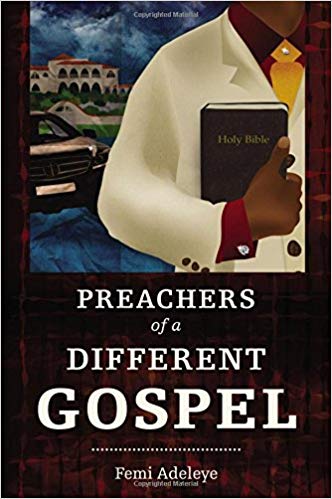
  • Preachers of a Different Gospel by Femi Adeleye

    Preachers of a Different Gospel by Femi Adeleye

    Preachers of a Different Gospel
    by Femi Adeleye

    (Nairobi, Kenya: Hippobooks & WordAlive Publishers, 2011)


    Preachers of a Different Gospel is a deep reflection by an evangelical on contemporary trends in Christianity in Africa. Femi Adeleye writes convincingly with facts and biblical justification on contemporary issues that have surfaced within contemporary Pentecostal Christianity, and which are undermining the evangelical faith in Africa. From a deep understanding of the Scripture and leadership in the evangelical students’ movements in the colleges and universities, Adeleye sounds a note of warning to the Church in Africa to remain faithful to the Scriptures.

    Contemporary Christianity in Africa as promoted by the Pentecostal and Neo-Pentecostal spirituality has largely focused on miracles, healings, on the success of preachers and tele-evangelists, and on the doctrinal emphasis on prosperity rather than on repentance of sins, Christ-likeness, holiness and faith in Jesus Christ. According to Adeleye, there is a new gospel promoting a trial-free life for Christians, emphasizing that God blesses financially and materially those who could exercise faith, that the preacher, i.e. ‘the man of God’ is very important in God’s scheme, that God can be commanded to respect our wishes, and overall that the Church in Africa has been made to accommodate worldly values to the detriment of biblical Christianity. It is true that neo-Pentecostals also claim the Scriptures as their authority, but according to Adeleye, they have promoted certain emphases that the Scriptures do not intend, and thereby distorted the Gospel of Jesus Christ. Among these new emphases are the promotion of materialism and prosperity as markers of true Christianity, the deification of ministers instead of directing the attention of converts to Jesus Christ, the deification of objects such as anointing oil, handkerchief, the elements of the Eucharist to effect miracles and bring blessings, the promotion of a gospel of vengeance on one’s enemies – whether real or perceived, the search for power by all means, and the glossing over of sins.

    According to the author, Pentecostal and neo-Pentecostal movements were the products of the Charismatic Renewal of the 1970s, which was built upon the rich Christian heritage inspired by evangelical Western missions in the 19th and early 20th centuries in Africa, a heritage which centred on the Gospel of the Cross, i.e. Christ died to redeem anyone who accepts Him. However, as the Charismatic revival waned in the 1980s, it produced a ‘worldly’ Christianity. The author traces the cause as due to lack of adequate biblical teaching, as the attention of the revivalists shifted from repentance, restitution and holiness to gift of tongues, signs and wonders, lively worship, the establishment of personal ministries likened to personal economic empires, the promotion of a faith in which moderation has given way to extravagance, sobriety has given way to pride, the taking of titles that became an obsession for Pentecostal pastors, and the creation of ministers who became celebrities or successful businessmen rather than humble servants of God. These doctrinal emphases and practices, Adeleye termed, ‘the strange gospel or fraudulent Christianity’ (page 3).

    In twelve chapters, Adeleye discusses some of the doctrinal deviations and practices of neo-Pentecostalism from the evangelical faith and the Gospel of Jesus Christ in contemporary Africa. The first three chapters set the tone of the discussion. According to the author, he did not set out to criticise or judge any neo-Pentecostal pastor, but to examine the claims of various shades of the different gospel in the light of the Scripture (page 4).

    Chapter Four highlights the beginnings of neo-Pentecostalism from the Charismatic renewal in the 1970s, and factors that have made the revival to go sour and moved away from its biblical moorings to a material-centred faith. Chapter Five discusses the modern preachers of this ‘different Gospel’ who have large followership because they centred their emphases on miracles, healing and prosperity, but lacked integrity, and failed to direct the faith of followers to themselves rather than the Lord Jesus Christ. Chapter Six explains how neo-Pentecostal ministers interprete Scriptures which has made them prone to error or exaggeration. The major method is ‘proof-texting’ i.e. ‘verses of the Bible are isolated and interpreted out of their literary context’ (p. 52.). Copious examples are given from the publications and sermons of neo-Pentecostal ministers to highlight this error.

    Chapter Seven titled ‘Counterfeit Faith’ discusses how the faith of young believers could be manipulated by Pentecostal preachers when subjective experience become normative, how faith could be misplaced when it focuses only on miracles and not God, and how faith could be misunderstood when preachers teach that faith must do extra-ordinary exploits all the time. ‘Faith is abused when we assume it is a magical force that makes virtually anything possible simple because we “believe”’. (p. 70). The author then submits that God should be the object our faith, we must seek to please him by our obedience and lifestyle’. (p. 73)

    Chapter Eight discusses ‘the delusion of prosperity’. He traces the origin of Prosperity Gospel to North American faith preachers of the 1950s through 1970s who interpreted tithes and offerings as investments that God will bless to yield hundredfold to believers who give. While this emphasis has contributed to the rapid growth of neo-Pentecostal churches in Africa as people seek financial empowerment, it has promoted materialism, ‘earthy inheritance’, ungodliness, and it has side-tracked simplicity and moderation, and created the impression that the Christian gospel is all about the rich and not about the suffering poor, who abound in millions in Africa.

    Chapter Nine is devoted on how neo-Pentecostals understand and view God. Neo-Pentecostalism has trivialised the transcendence of God, insisting that God is only interested in prosperous Christians. In addition, in prayers, Christians are led to believe that they can command God to obey the wish of believers and do according to their wishes.

    The last two chapters throw a challenge to Christianity in Africa that will promote godliness and accountability; a faith that will address the corruption and injustice in the land, that will seek to eliminate the overwhelming evil in the continent, that will deepen the faith of believers in God and promote holiness rather than searching for miracles all the time, and that will minister hope and the transforming power of the sacrificial death of Jesus Christ.

    The book represents one of the strong voices promoting evangelical Christianity in Africa in the face of the popularity of and media-hype on Pentecostal Christianity. In addition, the book mark as an important interpretative account of the doctrinal emphases and practices of contemporary African Pentecostalism. His examination of the teachings and practices of Pentecostal Christianity is deep, reflective, accurate and illuminating.

    Overall, the book is inspiring and makes an interesting reading. Definitely, the book deserves to be read by all those seeking a revival of evangelical Christianity in Africa.


    Book review by Matthews A. Ojo, PhD, Professor of Religious Studies Obafemi Awolowo UniversityIle-Ife, Nigeria

  • Prosperitizing Christianity- An Intro to an International Theological Crisis

    Prosperitizing Christianity- An Intro to an International Theological Crisis

    A “new gospel” is sweeping global Christianity. Jones and Woodbridge sounded the alarm a decade ago:

    A new gospel is being taught today. This new gospel is perplexing—it omits Jesus and neglects the cross. Instead of promising Christ, this gospel promises health and wealth, and offers such advice as: declare to yourself that everything that you touch will prosper, for in the words of a leading prosperity gospel preacher, ‘There is a miracle in your mouth.’ According to this new gospel, if believers repeat positive confessions, focus their thoughts, and generate enough faith, God will release blessings upon their lives. This new gospel claims that God desires and even promises that believers will live a healthy and financially prosperous life.1

    This new gospel is spreading rapidly and broadly beyond charismatic circles in American Christianity. Today, the prosperity gospel is being embraced even by evangelicals, especially internationally.2

    In 2006 the Pew Forum found 46 percent of self-proclaimed Christians in the United States and about 90 percent in Kenyans believed that God will grant material riches and economic success if one should have enough faith. We can see the evidence all around us in this facade of a gospelized culture, as key words and phrases are plastered everywhere—on matatus, buses, signboards, names of businesses: “blessed,” “by faith,” “God’s provision,” etc.

    How did we get here? What do we do to counter these peddlers of the prosperity gospel? We begin by identifying its philosophical and theological basis. There are at least three significant factors that have shaped this lens of prosperity—pseudo-Christian therapeutic psychology, animism, and bad hermeneutics.

    Prosperity Gospel as Pseudo-Christian Therapeutic Psychology

    In her book, Blessed: A History of the American Prosperity Gospel, Kate Bowler proposed a convincing argument that the prosperity gospel shares the same intellectual and theological roots as Christian Science and what would later be known as the New Age Movement. She wrote, 

    New Thought represents a cluster of thinkers and metaphysical ideas that emerged in the 1880s as the era’s most powerful vehicle of mind-power. [New Thought]…assumed essential unity between God and humanity, declaring that separation from the divine was only a matter of degree….As many New Thought authors worked inside a Christian framework, they explored “salvation” not as an act imposed from above by God, but rather an act of drawing out humanity’s potential.

    [In addition,] New Thought argued that people shared in God’s power to create by means of thought. People shaped their own worlds by their thinking, just as God had created the world using thought. Positive thoughts yielded positive circumstances, and negative thoughts yielded negative situations. 

    In its infancy, New Thought was largely preoccupied with healing…[offering] a religious alternative to the often harsh regimen of standard medical treatments. Bloodletting, mercury-laced purgatives, and arsenic tonics formed common “cures,” making orthodox medicine a potentially risky treatment. Early healers and systematizers of New Thought sought to explain illness as an imbalance resulting from wrong thinking.

    These gospels of health stood on one side of a blurry line between Christian metaphysics and metaphysical Christianity. One prioritized the method of mind-power, while the other concentrated on its relationship to Jesus’ death and resurrection.3

    Considering Bowler’s assessment, Thomas Kidd astutely noted, “As with so many types of aberrant theology, the prosperity gospel is dangerous precisely because it takes biblical themes to non-biblical extremes. It is not hard to demonstrate biblically that God wants an “abundant life” for his followers. But when that abundance gets defined in worldly terms, through the lenses of pseudo-Christian therapeutic psychology, we have the makings of a theological disaster.”4

    Prosperity Gospel as Syncretized Animism

    In the West, the rise and prominence of the prosperity gospel can be attributed to various philosophical and theological movements of modernity and the Enlightenment. But here in our African context, this counterfeit gospel is merely a syncretized form of animism. Per the animistic worldview, spiritual forces are behind every cause and effect in the universe and can be manipulated through the right channel. In this system, the shaman becomes the “voice” of the worldview, instructing fearful and/or hopeful pursuers of blessings or curses on what to do to bring about their desired end. Clearly this is the lens through which Joel Osteen wrote,

    When you say of the Lord you are healthy, you are whole, you are free, you are blessed, you are prosperous—when you say it, God has promised He will do it. …If you are not sharing in His favor, you might want to watch your words. Here’s the key: If you don’t unleash your words in the right direction, if you don’t call in favor, you will not experience those blessings. Nothing happens unless we speak. Release your faith with your words.5

    The role of shaman is a fitting one to describe prosperity preachers. Kenneth Copeland asserts that words have supernatural power—power that changes circumstances and shapes destinies. In his estimation it is our unique ability to choose and speak words that distinguishes man from the rest of God’s creation. He claims that man is created in God’s image and it was not just thoughts but words that God used to create us and the universe in which we live. When God said, “Let there be light,” light was. Therefore, words are the way God works. According to Copeland, because words are seen as spiritual; they carry power. Therefore, Copeland (and others like Joyce Meyer) have actually proclaimed that just as God looked into the void of nothingness and willed by his words, “Let there be light,” we as mini gods, can look into the nothingness of our circumstances and declare by faith and it will be.

    Is it any wonder that P.U.S.H.—“Pray Until Something Happens”—is the view of prayer held by so many across our region? Unfortunately, much of the praying that we see practiced around us is syncretized animism. People acting as though they have sovereignty over God or that in them rests the power to manipulate the circumstances of their lives or the spiritual forces at work around them. Without knowledge many people pray repeating the name Jehovah one hundred times in a given prayer or claiming things in the name of Jesus, but not in the biblical sense of praying. No, this kind of praying assumes that we have authority to PUSH God to act on our demands or requests rather than to rest in his absolute authority, wisdom, and pleasure.

    Prosperity Gospel as the Result of Bad Hermeneutics

    A third factor in the advancement of the prosperity gospel is bad hermeneutics. Simply put, prosperity preachers hold a pervasive, overarching hermeneutic that creates the filter through which eisegesis occurs in their interpretation of most Scriptures. Their approach to Scripture is accommodation—inserting their biases into texts, allegorizing Old Testament stories, failing to consider the historical and literary context of verses, ignoring the grammatical rules and semantics as employed by the author and understood by his original audience, and dishonoring the authors’ original, Holy Spirit-inspired meaning they intended to convey—to make the text fit their theology. Therefore, any passage of Scripture may be twisted to fit the prejudices held by the one who assumes that God’s mission is to help humanity to reach its greatest potential in the abundance of life. In other words, the prosperity gospel teaches “true Christian faith results in material wealth and physical well-being.” The pursuit of “abundant life” as defined by the reader becomes the modus operandi.

    There have been countless sermons on facing the giants in one’s life and overcoming them, or about going into and conquer God’s promise land—the land of overflow. But prosperity preachers will almost always gravitate to “blessings,” whether the passage includes the actual word or not. “Bless” is probably the greatest example of a word that has been hijacked of its meaning. The Old Testament uses two primary Hebrew words that are translated as “bless” — barak and esher. The former means to bow the knee as a sign of communicating one’s pleasure in another. The latter means to be happy or pleased with someone or something. Yet, in almost every use of “bless” by prosperity preachers, the implication is to receive material wealth.

    Perhaps the most familiar passage for prosperity sermons is Jeremiah 29:11—”For I know the plans I have for you, declares the Lord, plans for welfare and not for evil, to give you a future and a hope.” Again, these messages are typically not based on consideration of the historical, grammatical, or theological contexts.

    Conclusion

    As Christianity continues to shift to the global south, the gospel witness will be propagated from this continent. But what gospel will be proclaimed? To be certain, Paul clearly noted that there is in actuality no other gospel; rather, the church is troubled by those who “want to distort the gospel of Christ.” He emphatically warned that “…even if we or an angel from heaven should preach to you a gospel contrary to the one we preached to you, let him be accursed.”6

    Time and again the authors of the New Testament point out the presence and dangers of false teachers. As Jude urged the church in his day, let us “…contend for the faith that was once for all delivered to the saints.”7


    1David W. Jones and Russell S. Woodbridge, Health, Wealth & Happiness: Has the Prosperity Gospel Overshadowed the Gospel of Christ? (Grand Rapids: Kregel Publications, 2011), 14-15.

    Ibid., 16.

    Kate Bowler, Blessed: A History of the American Prosperity Gospel, (New York: Oxford University Press, 2013), 13.

    4Thomas Kidd, “The New Thought Roots of the Prosperity Gospel”, The Gospel Coalition, August 28, 2018, accessed from https://www.thegospelcoalition.org/blogs/evangelical-history/new-thought-roots-prosperity-gospel/.

    Joel Olsteen, It’s Your Time: Activate Your Faith, Achieve Your Dreams, and Increase in God’s Favor (New York: Free Press, 2009), 121-123.

    Galatians 1:6-10

    7 Jude 1:3

  • The Prosperity Gospel Among Neo-Pentecostals in Africa

    The Prosperity Gospel Among Neo-Pentecostals in Africa

    By Matthews A. Ojo


    Definition of Prosperity Gospel

    Since the 1980s, the Prosperity Gospel has become one of the major doctrinal emphases of contemporary Christianity in Africa. Borrowed from the American faith movement and Pentecostal televangelists, it became a popular concept by the mid-1980s, and was termed Prosperity Gospel by the media and scholars of religion.  The newness of this emphasis stems from the fact that biblical metaphors of success and material prosperity have taken on new meanings within the competitive modern market economy in Africa. Besides, this emphasis shows how Pentecostalism has responded to popular demand of Christianity for economic relevance in the African society.

    Simply put, Prosperity Gospel is a re-reading and interpretation of certain verses in the Bible in which God and the atoning death of Jesus Christ were understood to have promised a state of well-being, of abundance, of victory over social stagnation, abundance of money and materials to meet the needs of Christians so that they can live a life of spiritual and material abundance in the world.  

    Lacking any exegetical or contextual interpretation, and using proof text reading of the Scriptures as a method, Pentecostals and Neo-Pentecostals have taken certain passages as supportive of the doctrinal emphasis on prosperity.  The most quoted biblical passage is III John 2 ‘Beloved, I wish above all things that thou mayest prosper and be in health, even as the soul prospereth’ (KJV).  Similarly, other popular verses include Psalms 35:27, ‘Let them shout for joy and be glad … Let the Lord be magnified, which hath pleasure in the prosperity of his servant.’; Deuteronomy 8: 18, ‘But thou shall remember the Lord thy God: for it is he that giveth thee power to get wealth …’ Other verses include Deuteronomy 7:14; 8: 6-9; 28: 1-14; Joshua 1:7-8; II Corinthians 8:9, II Corinthians 9:6-8, Genesis 12:2; Zechariah 1:17 and Haggai 2: 6 – 8. 

    Prosperity preachers also insist that Christians enter into the realm of prosperity based on individual understanding of the God’s promises because God has given humans access to the Abrahamic covenant. Hence, one’s salvation launches one into the realm of God’s abundance, i.e. material benefits is the result of exercising faith.  However, Christians who are not prospering could be harbouring unbelief or are unaware of God’s promises and the laws of success or are not paying their tithes, or have accepted the lies of the Devil or are bogged down by sin and curses.

    As the emphasis gained attention in the mid-1980s so also emerged many publications mostly from Pentecostal pastors who initially promoted this emphasis. Generally, most of these Pastors started from the premise that salvation ushers in for the believer spiritual well-being; i.e. knowing and accepting Christ as one’s personal saviour. Thereafter in the exercise one’s faith, one could get the material benefits which include good health, wealth (money, houses, vehicles, etc.), and the ability to meet one’s needs as they come. 

    The doctrinal emphasis on prosperity has continued to elicit public interest because it has partly been associated with the growth of Pentecostalism in Africa since the mid-1980s. For instance, Paul Gifford in a major contribution has argued that the doctrine was an American export to Africa and represents a foreign religious commodity.[1]Birgit Meyer has revealed how the hidden obsession with wealth and power have provided powerful stimulus for Ghanaians Pentecostals in defining the Devil amidst the capitalist world economy.[2]Recently, Gifford has noted that the emphasis on success and wealth as this-worldly concerns among Ghanaian Pentecostals that partly built on traditional religious imaginations, and also ties into modern capitalist economy.[3]In another approach, Kwabena Asamoah-Gyadu and Kingsley Larbi have argued that Ghanaian Pentecostals and Charismatics coming from the Akan worldview tries to interpret the prosperity gospel as flowing from the concept of salvation.[4]  Other opinions abound on this debate.

    Doctrinal Emphasis of Prosperity Explained

    Some prosperity preachers insist that the emphasis flows from the concept of salvation, while others argue that prosperity is part of the blessings available to believers as part of God’s covenant with Abraham.  According to the Pentecostal preachers who lay great emphasis on prosperity, failure, poverty, unhappiness, and all forms of difficulties are considered as curses which should not be associated with Christians.  Rather, Christians should be successful and prosperous. ‘Prosperity’, according to David Oyedepo, ‘is a state of well-being in your spirit and body.  It is the ability to use God’s power to meet every need of men . . . In prosperity you enjoy a life of plenty and fulfilment. Prosperity is a state of being successful; it is life on a big scale’.  Oyedepo further stated that Christians do not enter into the realm of wealth and plenty as a result of prayer or fasting because it is not a promise but a covenant. Christians enter into the realm of prosperity based on understanding because God has given humans access to the covenant.[5]  Accordingly, Christians can get rich if they tap into the power of God.  ‘God has from the beginning created … you to prosper. God has capsules in the Bible, the unfailing laws of success’. ‘God is not partial. He wants everybody to prosper’. Therefore, ‘you must understand that you have the sole responsibility for your prosperity and good success.’ However, there is a limit to the capacity of humans to get wealth, because the unsaved i.e. non-believer could get prosperous materially, and some through unrighteous means.[6]

    The second aspect that is more emphasized in the contemporary era is material prosperity or financial prosperity, defined as having enough resources, which can be money, houses, cars, children, promotion, jobs, etc. Financial prosperity, though has its source in God, yet is the work of one’s hand. Some leaders pointed out that the vehicle through which God prospered the Old Testament men such as Abraham, Job, Solomon, etc. were the works of their hands. Thus, a responsibility is placed upon every Christian to engage his or her hands in worthwhile things.

    The first condition to accessing prosperity is to have knowledge of the word of God, obeying and serving God, being righteous and living in holiness, and not allowing riches have control over one. A Pentecostal pastor writes that the good and godly motive of being prosperous is for the propagation of the Gospel.  It is a false Christianity that equates poverty with piety, and at the same time it is bad to be devoted to materialism. The worship of materialism is mammon and a ‘rich fool’ is a person who is possessed by material wealth. 

    Generally, success and prosperity are perceived among Pentecostals as forms of healing when the Christian overcomes failure, poverty and backwardness, and live a life of sufficiency and abundance. To be prosperous, one is expected to give liberally and sacrificially towards the course of the Gospel, or ‘plant seed-money’ or sow ‘seed of faith’, as some neo-Pentecostals say. Some preachers emphasized that the more one gives to God’s work; the more abundantly the person receives in return. In fact, this aspect of the teaching has attracted much criticism from evangelicals. 

    Evangelicals have questioned the orthodoxy of the teaching that ignores Jesus’ teaching on the poor; a misinterpretation of the scope of the atonement; the false impression that giving automatically translates to prosperity; overlooking exegesis and interpreting Scriptural texts to support prosperity without their contexts, the idolisation of money and material wealth, overlooking suffering as a spiritual virtue, and the immoderate lifestyle of, and corruption among some prosperity preachers.[7]

    There are different refinements about the teaching on prosperity among neo-Pentecostal preachers, but generally the following listing represents the consensus within the constituency:

    1. God promises prosperity in the Scriptures and it is available to every Christian who accepts the scriptural truth. 
    2. Because prosperity is integral to the covenant with Abraham – ‘to bless and make him great’, Christians also stand as inheritors of that covenant. Hence, the popular chorus, ‘Abraham blessing are mine, I am blessed in the morning, I am blessed in the evening, Abraham’s blessings are mine’. 
    3. Material wealth and financial prosperity are necessary benefits of true spirituality which Christians must enjoy. Therefore, there is God’s approval when Christians are blessed materially.
    4. Understanding and acting by faith on the word of God is the path to prosperity. 
    5. Those who contribute generously in tithes, offerings, donations, etc. to the Church or God’s works ultimately receive abundant blessings from God because the quantity and quality of harvest is a function of the quantity of ‘seed’ sowed.
    6. If a Christian consistently lacks or is poor or has no material wealth to his benefit this could be considered an illness that needs healing.
    7. Christians who are undergoing suffering or sickness are out of the will of God. Unbelief and not tapping into the abundance of God’s resources is a sin. 
    8. Speaking positively, i.e. ‘name it and claim it,’ can lead Christians to higher grounds of prosperity.
    9. Christians should be strategic and business-minded in the Gospel ministry, so that they can make profit while serving the people.[8]

    Most preachers of prosperity often provide the principles or keys to utilise in entering the covenant of prosperity. Among these keys are dreaming big and expanding one’s horizon, believing, obedience to God’s command, sowing seeds or giving bountifully and sacrificially, partaking in ‘miracle meal’ i.e. the Eucharist, giving positive confession, exercising faith unconditionally, using anointing oil, claiming the power in the blood of Jesus, etc. In the David Oyedepo’s Living Faith Church, members regularly partake of the Eucharist, which is interpreted as shutting the doors against afflictions and failures and guaranteeing victory and success. Overall, this emphasis among neo-Pentecostals promotes the notion that one must not live below the optimum level but one must strive to add value to the resources that God has made available to humans, and continually endeavour to improve economically and socially.

    Historical Development of Prosperity Gospel

    As the Charismatic Renewal was undergoing denominationalisation in the 1980s into stable religious organizations with bureaucratic structures, the movement adopted great emphases on healing, which comprises of four major areas.  First is physical healing which is basic to all Pentecostal groups.  Second, there is healing constructed specifically with the African worldview of evil, witchcraft, and the world of spirits.  Within this realm, Pentecostals obtain healing when malevolent forces are cast out.  This process is termed ‘Deliverance’. Thirdly, the progressive nature of Pentecostalism is reflected in what is termed Success and Prosperity, which is healing over the socio-economic difficulties of the individual, and hence the believer can appropriate the blessings of Christianity.  Lastly, Pentecostals extended their healing activities over the political and socio-economic conditions of a nation.  This process is termed ‘Prayer for the Nations’’. However, prosperity has gained much grounds from the mid-1980s, and had become a distinct doctrinal emphasis. 

    Winning or fruitfulness are constant themes in sermons of churches stressing prosperity to a particular class of Christians.  Really, the neo-Pentecostal churches are urban in nature and have appealed to the educated middle class. Secondly, the churches’ entrepreneurial organization, sophisticated marketing techniques, and modernizing tendencies have facilitated the seemingly success of this emphasis on prosperity.

    Although subsequent development of the prosperity gospel was broader in scope, it was Archbishop Benson A. Idahosa (1939-1998), a Nigerian, who first propagated this doctrinal emphasis on a large scale among African Pentecostals in his continent-wide evangelistic programmes beginning from the late 1970s.[9]Writing in 1987, he noted that,

    God created men and women for a better life than many are experiencing…God never intended that anyone should go through life imprisoned by their own superstitions. He opens the door of success to every believer who will dare to step out and go after the good life. No one in God’s family was ever destined to exist in sickness, fear, ignorance, poverty, loneliness or mediocrity. God’s abundant goodness will be enjoyed and utilised by those who discipline themselves, become decisive, bold, adventurous, believing, daring, risking and determined.[10]

    By the time he died in March 1998, many other burgeoning African Pentecostal evangelists have accepted the teaching and had broadcast it wide through their radio broadcasts, television programmes, open air evangelistic meetings, tracts, Bible study outlines, booklets and audio tapes.  More important, testimonies or personal stories of individual successes which are spectacular are publicly advertised to strengthen the validity of their doctrinal emphasis on prosperity.

    The greatest apostle of Prosperity Gospel is David Oyedepo, the founder of Living Faith Church (popularly known as Winners’ Chapel) who was ordained by Idahosa in 1987. In 1995, he embarked on an expansion strategy from Nigeria into other African countries, and by 1997, branches have been established in thirty other African countries.  Oyedepo teaches that Christians are destined to experience abundance and material wealth in the world, therefore, they should aspire to be prosperous, and they should be known for their prosperity in the society, like riding good cars and wearing costly dresses.

    In practical terms, messages on this emphasis have been motivational, very assuring, and depict instances of triumphalism.  Indeed the founders often proved the efficacy of the messages with flamboyant and expensive lifestyle. Some do travel to the West for medical check-up, and some have bought private jets. There are also structures and educational investments like privately-owned universities to advertise this. Members often give testimonies of what they termed ‘supernatural financial breakthrough’.  Spiritual retreats have moved from the old evangelical camp meetings in the countryside to success seminars in downtown five star hotels.  Generally, there are corporate images of success to project this emphasis, and to launch members on the quest for upward material and social mobility.

    The Political and Socio-Economic Contexts of Prosperity Gospel

    What sustains this new doctrinal emphasis and the apparent quest for material wealth among neo-Pentecostals could be traced partly to the socio-economic and political upheaval in the African continent and the contemporary deteriorating economic situation in the 1980s and 1990s. The predatory nature of governance in Africa, the widespread corruption of the elite, the imposed-World Bank Structural Adjustment Programme with its austerity measures, the growing incidence of poverty in the continent despite several interventionist programmes, seem to have driven the masses to untold suffering. By the mid-1980s, a section of Pentecostal churches in Nigeria has legitimatised their existence by promoting the cause of the economic hardship to the forces of Satan as they wreaked havoc in the lives of individuals and in the African nations in general. Hence, the promise of miraculous wealth, perceived as healing, made the prosperity Gospel very popular among the lower and middle classes who have experienced economic destitution, and who saw opportunity for compensation to their economic travails, through the rhetoric of prosperity preachers.

     Besides, the attraction of ‘corrupt’ wealth has partly given currency to the emphasis on prosperity which has afforded neo-Pentecostals a means of responding to the economic conditions and the social values around them. While Pentecostals may argue that there is consonance in their emphasis with biblical prescriptions of wealth and well-being, the dissonance is manifested in the neo-Pentecostals’ pursuit and vending of prosperity as though economics and social structures of the society do not matter. The miraculous wealth without any commensurate productive activities also finds some congruence in the magic wealth that has become the dominant theme in the contemporary African home video films. 

    In Africa wealth is a means to recognition in the society and the means towards political power.  People have used various means to acquire wealth.  Hence, the emphasis on prosperity legitimizes the quest for materialism and the associated power and prestige that has characterized the values of African society since the 1980s. Neo-Pentecostals, through their doctrinal emphasis on prosperity as a new spirituality, have helped to lend new meanings to the quest for materialism, which traditionally has been subject of condemnation in old time evangelical Christianity. 

    Lastly, the social capital that neo-Pentecostal emphasis on prosperity has generated in terms of the drive and motivation to invest and succeed, to eliminate poverty by hard work, to create economic networks that can facilitate entrepreneurship, the promotion of frugality and economic risk-taking, are reflective of Max Weber’s Protestant ethic.  However, no stimulation for large scale economic development or enduring religious values have yet emerged to justify the economic implication of the Prosperity Gospel on the larger society.[11]

    Conclusion

    The continuing popularity of the Prosperity Gospel among neo-Pentecostals and African Christians, as already pointed out, arose from the fact that biblical metaphors have assumed new meanings in rapidly changing socio-economic situations. The failure of the economic and political systems to give better life to the citizenry have stirred up images of evil. Thus, poverty and backwardness are considered illness to which prosperity, as a healing factor, has been employed to rectify. Consequently, the emphasis on prosperity has become a powerful metaphor in negotiating wider socio-economic concerns, which they consider important within their socio-cultural background and the dislocation of contemporary life in a capitalist economy.


    [1]Paul Gifford,‘Prosperity: A New and Foreign Element in African Christianity’,Religion,(1990)20:4,373-388.

    [2]Meyer, Birgit. Translating the Devil:Religion and Modernity among the Ewe in Ghana(Trenton, NJ: Africa World Press, 1999), pp. 237-8.

    [3]Gifford, Paul. Ghana’s New Christianity: Pentecostalism in a Globalizing African Economy. (London: C. Hurst & Co., 2004).

    [4]J. Kwabena Asamaoh-Gyadu, African Charismatics: Current Developments Within Independent Indigenous Pentecostalism in Ghana(Leiden: Brill, 2005), 201-232. See also E. Kingsley Larbi, ‘The Nature of Continuity and Discontinuity of Ghanaian Pentecostal Concept of Salvation in African Cosmology’, Asian Journal of Pentecostal Studies5. No. 1 (2002): 99-119.

    [5]Weekly Faith Digest, published by Living Faith Church, No 89/20, p. 3. See also David O. Oyedepo, Signs and Wonders Today: A Catalogue of the Amazing Acts of God Among Men(Ota: Dominion Publishing House, 2006), pp. 165-169.  See also David Oyedepo, Making Maximum Impact(Ota: Dominion Publishing House, 2000), pp. 71-72.

    [6]Hartford Anayo Iloputaife, Dynamics of Biblical Prosperity(London, Victory Publications Inc. of Faith Revival Ministries World Outreach, 1995), pp. 9-11and15-17.

    [7]The media has reported on some of the moral scandals involving prosperity preachers in Africa and in the Western world.  It is invidious to mention names and we lack the space to discuss any of them here.

    [8]For details of David Oyedepo’s capitalist strategy, see Oladimeji Olutimehin, Business Secrets of David Oyedepo: How From Poverty He Became the Richest Pastor on the Earth – You Too Can(Akure, Nigeria; Kingdom Books & Media, 2015)

    [9]For more on Benson Idahosa see Matthews A. Ojo, ‘Nigerian Pentecostalism and Transnational Religious Networks in West African Coastal Region’ in Entreprises Religieuses Transationales En Afrique d l’Ouestedited by Laurent Fourchard, André Mary, and Rene Otayek, (Paris: Editions Karthala & Ibadan: IFRA, 2005), pp. 395-415. 

    [10]Benson Idahosa, I Choose to Change: The Scriptural Way to Success and Prosperity(Crowborough, UK: Highland Books, 1987), pp. 9 & 14.

    [11]For critique of the Protestant Ethic and the Prosperity Gospel, please see Paul Gifford and Trad Nogueira-Godsey, ‘The Protestant Ethic and African Pentecostalism: A Case Study’,Journal for the Study of Religion, Vol. 24, No. 1 (2011), pp. 5-22