Tag: Neo-Pentecostalism

  • Book Review of A New Apostolic Reformation

    Book Review of A New Apostolic Reformation

    R. Douglas Geivett and Holly Pivec. A New Apostolic Reformation: A Biblical Response to a Worldwide Movement. Bellingham, WA: Lexham Press. 2014. 254 pp.

    Introduction

    This book surveys the rise of the so-called New Apostolic Reformation (NAR). The NAR movement’s roots can be traced to the 1980s in North America but is now a world-wide phenomenon. The central figure in this movement is the late C. Peter Wagner. Wagner was still living when Geivett and Pivec researched and wrote this book. Wagner passed away on 21 October 2016. Lexham Press published New Apostolic Reformation? in 2014. There are nineteen chapters, a preface, a conclusion, and three appendices. The book is endorsed by a number of Evangelical pastors and scholars. This list of endorsements includes Daniel Wallace, Craig Evans, Amos Yong, and Paul Copan.

    Both Geivett and Pivec are connected to Biola University in La Miranda, California in the United States. Geivett is a professor of philosophy at Talbot School and Theology at Biola, and Pivec holds an MA from Biola. Geivett holds a PhD from the University of Southern California. Pivec mentions that her church family is Bethel Church in Fairbanks, Alaska (xvii). The two of them also collaborated on a book entitled God’s Super Apostles: Encountering the Worldwide Prophets and Apostles Movement. This second book was published in 2018.

    The authors refer to NAR as a worldwide movement. The also demonstrate that NAR has had international impact. However, the focus of the book is the impact, influence, and response to the NAR movement in North America.

    Book Summary

    The nineteen chapters in this book are all relatively short. The longest one, chapter 15, is sixteen pages long. The shortest chapter, chapter 16, is only seven pages long. Meanwhile, the conclusion is just one page. Each chapter contains an introductory paragraph which presents the topic to be covered and also gives outline of how the authors will address the topic. Each chapter also contains a brief summary of the chapter at its conclusion. All of these features make this book very accessible and easy-to-read. The cover is cleverly designed by Frank Gutbrod featuring art by Mark Dobratz. The book is dedicated to “the Church, the Bride of Christ.” 

    Preface

    The authors’ preface lists two major goals: to give the readers “an idea of the sheer size and reach of NAR” and “to systematize NAR’s key teachings and practices and evaluate them on the basis of Scripture and careful reasoning” (xiv). The authors are able to achieve both of these goals — though I would say that they are really three goals, since the systematization of NAR teaching and practice is often separate from the authors’ evaluation of that system.

    For me, one of the most confusing statements in the entire book is in the preface. The authors write that they believe that the NAR proponents are “genuine disciples of Jesus.” This evaluation is confusing, because the authors will go on to write about the dangers, problems, mistakes, and heterodoxy of the entire NAR movement. In a spirit of humility, they conclude their preface by inviting dialogue with members or defenders of the NAR community: “And we welcome the opportunity to consider evidence that we have erred in anything we have written” (xvi). 

    Below, I will provide a brief summary of each chapter. Then, I will give some reflections on the book as a whole.

    Chapter One

     Chapter one is entitled “What is the New Apostolic Reformation,” and the chapter traces its history. The authors contend that the “biggest innovation” of the NAR movement is the idea that “apostles . . . with prophets, must take over governance of the church . . . so that God’s end-time plans can be fulfilled and Christ can return” (1). The centrality of these so-called apostles and prophets is the theme of the movement (and therefore the book). While the NAR does in one sense represent something new; it is also something old, since false teaching is as old as creation itself.

    The authors mention groups dating back to the 1830s but specifically zero in on a group from the 1940s called “The Latter Rain” movement (4). This movement influenced many contemporary NAR leaders like Vineyard’s Wimber and International House of Prayer’s Bickle. These, and other, NAR proponents claim to deny doctrines that go beyond Scripture, but many of their official doctrines, “including the restoration of the offices of apostle and prophet” do appear to affirm Latter Rain influences (or at least similarities) (7). 

    Chapter Two

    Chapter two demonstrates the size and influence of NAR. In demonstrating NAR’s size and political influence, the authors introduce another key concept in the NAR movement. The term “five-fold ministry . . . refers to the belief that God has given the church [sic] five continuing governmental offices: apostle, prophet, evangelist, pastor, and teacher” (10). The authors put the total number of individuals who have “likely come into significant contact with NAR teachings” as “over 66 million.” More than half of these, 36 million, have “been influenced the most by NAR” (12-13).

    In addition to the size of the NAR movement, the authors mention its political influence. This influence is demonstrated by listing several prominent US politicians and societal leaders. These leaders have participated in one way or another with NAR proponents and events (16-17).

    Chapter Three

    Chapter three traces the “mainstreaming” of the NAR movement. Citing influences on the internet, academia, influential evangelicals, and youth, Geivett and Pivec argue that “NAR leaders have begun to mainstream their movement within the larger Christian world” (29). This mainstreaming of the NAR movement is another aspect of this movement that distinguishes it from previous movements such as the Latter Rain movement.

    Chapter Four

    Chapter four, entitled “NAR Apostles: The Generals,” defines the word apostle and shows how different Christian groups understand the term. As mentioned earlier, the NAR view distinguishes itself from other groups by claiming that not only does the gift of apostleship exist to today, but so does the office. For NAR proponents, modern day apostles are “sent by God with the authority to establish the foundational government of the church” (38).[1]According to C. Peter Wagner, there are different kinds of apostles, but all of them “are individuals with formal offices in church government and authority extending to workplaces, cities, and nations” (44).

    Chapters Five through Nine

    Chapter five takes a closer look at the NAR concept of apostles. The authors list characteristics of apostles as well as their limits. The authors then cite some of the passages used to support NAR teaching. An evaluation of this support comes in chapters eight and nine.

    Chapter six reviews the way that the Bible talk about Paul and The Twelve as the original apostles. The seventh chapter presents other apostles in the Bible — including the category of false apostles.

    Chapter eight compares (and contrasts) “genuine apostles in the Bible to NAR apostles” (76). The authors conclude that the NAR movement fails in its attempt to demonstrate that the office of apostle is an ongoing office (84). Chapter nine presents five biblical tests that “such apostles must still pass” in order to be confirm their apostleship (85). After recounting different NAR leaders attempts to the authors write “many NAR leaders either disregard these tests or fail to present convincing evidence that they have passed . . .” (95).

    Chapters Ten through Fourteen

    After several chapters dealing with the idea of apostles, chapter ten turns the reader’s attention to the idea of prophets. The authors refer to prophets as “the secret intelligence agents” of the NAR movement (96). As with the concept and office of apostles, the authors present various views of prophets — including the NAR view. As with apostles, the NAR view is out of step with orthodox and historic Christianity since “NAR leaders claim that the prophets of today reveal new truths and hold a formal office in church government . . .” (104).

    In chapter eleven, the authors lay out the functions of prophets according to NAR. Chapter twelve reviews the biblical teaching about prophets. Chapter thirteen compares (and contrasts) NAR prophets with prophets in the Bible. The conclusion is that “there is no basis for a present-day office of prophet that governs the church or prophets who prophesy to nations or give new truths” (137).

    As chapter nine did for apostles, chapter fourteen offers some tests for NAR prophets to determine “whether a prophet is genuine or not” (137). The authors at first suggest three tests and then add two more. Those tests are the fulfillment test, the orthodoxy test, the lifestyle test, the miraculous signs test, and the ancestry test. The authors then list and reject two “unbiblical tests for prophets” suggested by NAR proponents. They conclude that “the consistent application of these tests by many NAR leaders is sketchy at best, and the tests they themselves propose are subjective and irresponsible” (149).

    Chapters Fifteen and Sixteen

    Chapter fifteen “explains some of the key strategies NAR apostles and prophets have revealed to advance God’s physical kingdom, many of which are related to an overarching strategy they call ‘strategic-level spiritual warfare” (151). This overarching strategy includes several approaches. They are spiritual mapping, prayerwalking, indentificational repentance, workplace apostles, and the seven mountain mandate. While chapter fifteen merely introduces these topics, chapter sixteen evaluates these approaches.

    I found chapter sixteen especially helpful (despite it being the shortest chapter). Instead of merely uncritically dismissing the types of “strategic-level spiritual warfare,” the authors cut with a knife and pull out aspects of these various approaches which are biblical and helpful. For instance, on the topic of spiritual mapping, they write that “some simply create spiritual profiles of cities or nations to guide Christians to pray intelligently” (168), and they specifically mention Operation World.

    At the same time, the authors clearly reject the central concept behind the overall approach: “The NAR strategies of spiritual warfare we’ve discussed are without biblical precedent and, quite frankly, ineffective, if not also spiritually risky. They’re also distracting Christians from the pursuit of biblical strategies that are effective” (172). I believe that this criticism is spot on. Some of the methods espoused by the NAR movement are most dangerous because they crowd out more biblically based approaches like Bible meditation and study.

    Chapter Seventeen

    Chapter seventeen discusses NAR’s attempts to “attain unprecedented unity and transform society” (173). For those in the NAR movement, unity is based on “apostolic leadership, rather than doctrine” (177). The authors conclude that this kind of unity “requires concession to teachings that are completely absent from the Bible, teachings peculiar to NAR” (180).

    Chapters Eighteen and Nineteen

    Chapter eighteen outlines NAR’s approach to miracles. According to the authors, there are three distinctions about the NAR approach to miracles. First, NAR leaders believe that the miracles that they will perform will be “unprecedented in terms of their grandeur and frequency” (182). Second, “new truths . . . are crucial to ‘activating’ miraculous gifts among individuals” (182). Third, NAR followers will grow to the point that they will “‘loose’ God’s judgments on earth and become immortal” (182).

    In sum, the NAR view of miracles is “out of step with what the majority of Christians have historically believed” (193). Similarly, in chapter nineteen, which is an evaluation of NAR’s view of miracles, the authors write, “there is no biblical support for NAR teachings about the rise of miracle-working army that will perform greater miracles than those performed by Jesus or the apostles of Christ” (202).

    Appendices

    The first two appendices deal with issues related to the legitimacy of apostolic claims made by NAR leaders. The authors correctly teach that “we do well if we give ourselves to the careful study of Scripture, and look not to so-called new truths from present-day apostles” (208). The final appendix lists NAR networks. The book also contains a helpful bibliography, a name index, a subject index, and a Scripture index.

    Reflections 

    In this section, I want to briefly touch on two themes that appear throughout this book.

    Apostles?

    The first and most obvious theme is the concept of apostles. As mentioned earlier, the NAR movement is based entirely around the concept that the office of apostle still exists today. This movement is based entirely the on the legitimacy of this claim. One of the key ideas that emerged in chapter nine’s discussion of testing NAR apostles is the concept of veracity or verifiability. Many of the NAR apostles make claims that are simply unverifiable. Some claim to have physically seen Jesus. Others claim to have performed great miracles or to have received a special (unique to them) commissioning from Jesus. None of these are verifiable.

    If one has accepts the premise that the office of apostle still exists today, much of the rest of the claims and peculiar doctrine easily come in. However, this central claim concerning the office of apostle is simply biblically unwarranted.

    You Protest too Much!

    Another theme that occurs throughout the book is simply denying that one holds to a certain doctrine is not enough. If the body of one’s teaching shows affirmation of the certain doctrines, one cannot deny to hold them. For instance, while the leadership of the International House of Prayer claims to deny that their beliefs and practices are connected to the Latter Rain theology of the 1950s, “website visitors . . . will be confused, since IHOP does appear to embrace key Latter Rain teachings, including the restoration of the offices of apostle and prophet” (7).  

    Also, despite Rick Joyner’s insistence otherwise, “the revelations of many NAR prophets – including his [Joyner’s] own – do seem to establish doctrine” (115). One final example involves Bill Hamon’s teaching about modern-day prophets. The authors write, “When he [Hamon] demands that all Christians must accept such prophets’ new truths, is he not claiming, in effect, that their words are equal to Scripture?” (135)

    Conclusion

    This is a very helpful book. The authors expose some of the supposed biblical and theological underpinnings to much of influence of Neo-Pentecostalism around the world. The authors write in a clear, direct, and concise manner. They use direct evidence to support their overall thesis that the NAR movement is both extra-biblical and potentially very dangerous. 

     The authors’ one-page conclusion is summarized by one statement: “Discernment is needed if believers are to understand the actual dynamics of the New Apostolic Reformation and identify where it departs from traditional teachings” (203). Furthermore, they write that “it’s incumbent on Christians to resist association with this extremist movement and to be wary of its infiltration of our churches” (203).


    [1]Originally taken from C. Peter Wagner, Dominion! How Kingdom Action Can Change the World (Grand Rapids: Chose Books, 2008), 26. 

  • Book Review of God, Greed, and the (Prosperity) Gospel

    Book Review of God, Greed, and the (Prosperity) Gospel

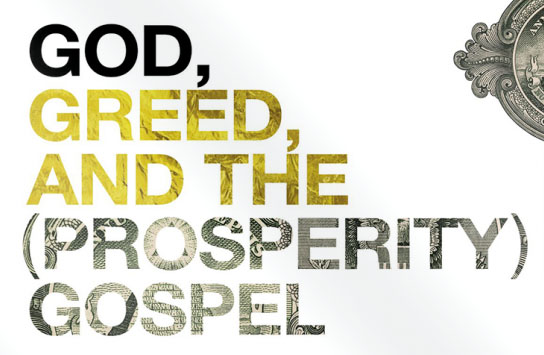
    Costi Hinn. God, Greed, and the (Prosperity) Gospel.  Grand Rapids, MI, USA: Zondervan, 2019, 223 pp.

    Introduction

    “The prosperity gospel is a disease” (178)

    Costi Hinn ends a chapter entitled “A Dangerously Abusive Theology” in his 2019 autobiographical salvo against the Prosperity Gospel with that statement. Throughout this book, Hinn weaves together stories, theology, biblical exposition, and exhortation. In doing so, Hinn answers the question, “So why did you walk away from that life?” (18) 

    Zondervan published Hinn’s book, and they released it in 2019. It comes with endorsements from a number of evangelical pastors, leaders, and scholars — from Steven Lawson to Conrad Mbewe.

    The book contains eleven chapters along with a preface and two appendices. Below is a brief summary of each chapter.

    Summary

    The preface answers the question “why.” Why did Hinn feel compelled to write the book. Hinn also addresses this question in an FAQ in Appendix 1. In sum, Hinn wants to address the “gospel injustice” that Prosperity Gospel (PG) teaching brings (18).

    Chapter One

    Chapter one is a brief biography of the Hinn family. Hinn traces their roots to a mix of Middle Eastern culture and Greek Orthodox religion. He comments that the language of his grandfather’s home was Arabic. He also mentions that while being “staunchly” Greek Orthodox, the religion played more of cultural role than a spiritual one. His family emigrated to North America (Toronto, Canada) in 1968. Hinn’s father’s and uncle’s classmates often bullied them because of their lack of English language skills. The Hnn family adopted the teachings of Kathryn Kuhlman whose mantra, “Don’t grieve the Holy Spirit.” (27). Hinn’s uncle, Benny Hinn, began a teaching and healing ministry. He modeled his ministry on the ministries of Kuhlman, Oral Roberts, and other prosperity teachers (29).

    Chapter Two

    Chapter two addresses the topic of bullying in Hinn’s pre-teen and teenage years. At times, other students bullied Hinn. At other times, Hinn bullied others. Hinn concludes the chapter with a story of a time when the family of the boy whom he assaulted with a skateboard Hinn loved and embraced him. Hinn recalls how, as a teenager, this love and grace is the face of rage and anger shocked and surprised him (44).

    Chapter Three

    In chapter three, Hinn recounts his attempts to try to make sense out of life (and death) according to the so-called “laws of prosperity.” When one of his uncles dies of cancer, Hinn’s only conclusion is that the uncle (or one of family members) must have been guilty of committing one of the “Big Four” (49). The “Big Four” is a list of actions that one must have committed if you are not healed. They include “making a negative confession,” “hanging around negative people,” “not having enough faith,” and “touching the Lord’s anointed.” These “sinful” actions will show up in other parts of Hinn’s story as he wrestles with the “gospel” that he was presented as a child with the biblical gospel that he came to discover. 

    Chapter Four

    In chapter four, Hinn recalls his life of luxury during his time as a staff member with his uncle’s ministry. After vividly describing the lavish lifestyle that he enjoyed, Hinn comments that “we weren’t preaching the same gospel as Paul” (66). Hinn also recalls how he was beginning to see that the lifestyle that he enjoyed was “fueled by taking advantage of others” (59). These others were often “desperate people who believed that giving a prosperity preacher their money would result in their living this lifestyle too” (59).

    Chapter Five

    In chapter five, Hinn tells how the system and world of the Prosperity Gospel begins to unravel. This unraveling happens as he began to ask questions that did not have satisfactory answers. Hinn realized that most people (especially the poorest of the poor) were leaving his uncle’s services unhealed and even poorer than when they began (75). During this time period, Hinn begins to realize that “God does not take kindly to leaders going around lying to people in his name” (80).

    Chapter Six

    In chapter six, the truth of the gospel confronts his worldview. Hinn tells how he first heard the gospel taught and lived out at Dallas Baptist University (DBU). In an experience that can only be described as providential, DBU offered Hinn a baseball scholarship. While his family warned him about the impact that Baptists might have on his belief system, Hinn assured his father that he “would not become some stuffy Baptist” (84).

    Both his baseball coach Dan Heefner and his professor Dr. Mike Milburn taught and lived out the gospel in front of Hinn. One of my favorite lines from this chapter is, “Baptists hate the prosperity gospel” (85). Hinn goes on to quote Mbewe, Al Mohler, and Russ Moore to support this idea. As a life-long Southern Baptist, I heartily agreed with Hinn’s assessment! Hinn closes this chapter with the ominous statement that “all roads that the prosperity gospel paves lead to hell” (100).

    Chapter Seven

    In the seventh chapter, Hinn begins to see the gaping holes in PG thought. Hinn’s fiancé (now wife) Christyne is introduced in this chapter, and she plays a vital role in this process. Hinn recalls four events that took place between 2011-2012 that “deepened our convictions about the prosperity gospel circles we ran in” (116). The first three events were orchestrated by the Hinn family to try and convince Christyne of the truth of PG teaching but backfired on them and showed Hinn the truth. The fourth was a time when Christyne nearly died of an asthma attack because she was hiding her treatment medication from the Hinn family. By the end of the chapter, Hinn recalls how at that point in his life he is convinced that he must either follow the ideas and philosophies that he has been taught his whole life, or he must follow biblical teaching.

    Chapter Eight

    In the eighth chapter, Hinn escapes his life in the Prosperity Gospel. As he recounts the story of how that happened, two big theological ideas stand out. First, God is sovereign over all things. PG teaching asserts that we can manipulate God and force him to act on our behalf. Hinn confronts this false teaching with the clear biblical teaching that God is in control of all things and is “not some cosmic genie who exists to give me what I want and do what I command him to do” (141).

    The second big theological idea is God’s glory. Hinn came to understand that “God’s highest purpose was not to make me happy, healthy, and wealthy; it was to give him glory” (141). Hinn also began to find new theological heroes. He began to read books by and about people like William Tyndall, Hudson Taylor, Charles Spurgeon, and others. Hinn began his theological study at Talbot School of Theology and then transferred to Midwestern Baptist Theological Seminary.

    Chapter Nine

    In chapter nine, Hinn presents the truth that PG theology and thought is dangerous and destructive. Hinn gives the reader a very brief history of how PG developed. He also tries to explain why PG preaching is so appealing to people. He writes that, “the prosperity gospel appeals to the deep longing of every human heart for peace, health, wealth, and happiness” (155). Hinn also mentions in this chapter how PG preachers exploits places like South America and Africa and seeks to exploit some of the poorest people in the world.

    After that, he lists four truths about the PG preachers and ten truths about PG thought. Hinn shows that false teachers are disguised as good guys (164), use deception to get rich (166), are in demand (167), and will get what they deserve (168). As for the ten truths of PG thought, Hinn writes that the prosperity gospel distorts the gospel (170), insults God’s nature (172), confuses the atonement (173), demeans Jesus Christ (174), twists Scripture (174), is motivated by love for money (175), produces false converts (175), overcomplicates the faith (176), ruins Christianity’s witness (177), and abuses vulnerable people (177).

    Chapter Ten

    In chapter ten, as the title of the chapter indicates, Hinn presents “a balanced view of health and wealth” (179). PG is dangerous because it mixes gospel truth with heretical falsehood. Hinn presents five principles for health and five principles for wealth. As for health, Hinn insists that “God still heals today” (181). He also writes that “Heath isn’t guaranteed on earth” and that “Christian joy is not dependent on circumstances” (182). The fourth principle for health is “suffering and trials are a part of life” (183). The final principle for health is that “physical limitations do not limit ministry impact” (184).

    When discussing biblical principles on wealth, Hinn writes that “God owns everything” (185). Second, as with health, “Wealth isn’t guaranteed on earth” (186). Third, “Wealth is a tool for gospel advancement” (187). Fourth, “Wealth is not a sign of elite spiritual status” (188). Finally, “Wealth is an immense responsibility” (190).    

    Chapter Eleven

    In the final chapter, Hinn exhorts us as readers to reach out to people who are trapped in the Prosperity Gospel. From Jude 22-23, Hinn lists three categories of people who are caught in deception: “the doubters” (196), “the deceived” (196), and “the dangerous” (197). After describing each of these categories, Hinn gives the reader ten steps “for reaching people who are caught in dangerous belief systems” (198). First, “pray for them” (201). Second, “study the truth” (202). Third, “deal with your heart issues” (203). Fourth, “seek a private audience” (204). Fifth, “ask questions” (205). Sixth, “speak the truth in love” (206). Seventh, “don’t personalize disagreement” (207). Eighth, “leave the door open” (207). Ninth, “provide resources” (208). Finally, “never give up.” These ten steps apply to people caught in any false system — not just PG teaching.

    Appendices

    In Appendix 1, Hinn gives answers to many FAQs (Frequently Asked Questions). Appendix 2 is a list or recommended reading under various categories.

    Common Themes 

    Hinn’s book has several themes that run through the book. I want to highlight a few of those.

    Logic is Anti-Faith

    First, Hinn demonstrates that PG thought believes that logic is anti-faith. For example, Hinn recalls how his father and others taught him to disengage his mind from his faith: “Don’t think too much about it or you’ll start to doubt and lose faith! Disengage your mind, engage you spirit” (34). This approach to though life is more akin to Eastern thought and Buddhism than it is to biblical faith.  Later in the book, Hinn writes that he “had been taught that . . . logical thinking is the antithesis to supernatural miracles and abundance” (106).

    Scripture Twisting

    Perhaps the clearest theme that runs through Hinn’s criticism of the Prosperity Gospel is that it twists and ultimately contradicts Scripture. To quote Hinn, “The prosperity gospel fools people by mixing some of God’s truth into their poisonous theological concoction” (181). In one of the earlier chapters, Hinn writes that one of his family’s heroes, Oral Roberts, taught that “faith forced God to do what we wanted him to do. Believing enough, thinking positively enough, and giving enough could control the Creator” (47). Later, Hinn follows up on this theme: “This twisting of the Bible make God a cosmic banker in charge of dispensing your wishes” (99).

    The theme of Bible twisting shows up as Hinn is describing Christyne when he contrasts her view of the Bible and his family’s. He writes, “If the Bible said it, she’d believe it. We, on the other hand, twisted a lot of things the Bible said” (108). As Hinn recounts his exit from his family’s teaching, he tells how he walked into his pastor’s office and exclaimed,

    “It was a lie! We twisted Scripture! We manipulated people! We smeared the gospel!” (142).

    Hinn hates the fact that in all of this “Jesus was being misrepresented” (142). I will give one more example of Hinn’s story of how the PG twists Scripture by circling back to one of the Hinn family’s heroes, Oral Roberts. Hinn mentions two of his books that “butchered the true gospel” (156).

    Again, this theme of Scripture twisting leading to false teaching is constant through the book. It demonstrates the need for sound biblical interpretation skills (hermeneutics). As Hinn writes, “The prosperity gospel takes the age-old interpretive strategies that scholars have used for generations and turns them upside-down” (175).

    Wealth at the Expense of the Poor

    The final theme that I want to touch on is the idea that wealth itself is not the problem — wealth at the expense of the poor is. This idea first shows up when Hinn writes “with each purchase and lifestyle addition, the demand for funding increased” (64). In other words, as the lifestyle went up, the need for donations and contributions (often from among the poor) increased. In his chapter entitled, “Unanswered Questions,” Hinn recalls how he began to have questions like, “Shouldn’t money be a tool for doing more ministry?” (78). Later, Hinn writes that the lavish lifestyle his family enjoyed would not be the problem “if we were real estate moguls or corporate CEOs”  (109).

    Conclusion

    The Prosperity Gospel is a cancerous demonic attack on the Church of Jesus Christ. The Church must confront, rebuke, and defend the Gospel against this false teaching. This book is a helpful tool in that spiritual battle. Hinn’s writing style is authentic and heartfelt. It is also direct and to the point. While Hinn does not pull punches, he also does not slander or attempt to make ad hominem attacks.

    In conclusion, I heartily recommend it to anyone who desires to be part of the solution to the problem that this movement represents. As Hinn writes, “It’s time for Christianity to send the message that the prosperity gospel will poison our witness and win over the hearts of the hurting. We must stand firm in our faith and trust the truth to win the day. That starts by telling the truth, no matter how uncomfortable that may be” (178).


    Phil Barnes serves as a lecturer and Interim Academic Dean at The Baptist Theological Seminary of Malawi in Lilongwe, Malawi. His focus is teaching Missions and World Religions. He holds a MDiv and a PhD from The Southern Baptist Theological Seminary in Louisville, USA. Phil and his wife Laura have been married since 1997 and have 2 sons: Daniel and Jonathan.

  • Preachers of a Different Gospel by Femi Adeleye

    Preachers of a Different Gospel by Femi Adeleye

    Preachers of a Different Gospel
    by Femi Adeleye

    (Nairobi, Kenya: Hippobooks & WordAlive Publishers, 2011)


    Preachers of a Different Gospel is a deep reflection by an evangelical on contemporary trends in Christianity in Africa. Femi Adeleye writes convincingly with facts and biblical justification on contemporary issues that have surfaced within contemporary Pentecostal Christianity, and which are undermining the evangelical faith in Africa. From a deep understanding of the Scripture and leadership in the evangelical students’ movements in the colleges and universities, Adeleye sounds a note of warning to the Church in Africa to remain faithful to the Scriptures.

    Contemporary Christianity in Africa as promoted by the Pentecostal and Neo-Pentecostal spirituality has largely focused on miracles, healings, on the success of preachers and tele-evangelists, and on the doctrinal emphasis on prosperity rather than on repentance of sins, Christ-likeness, holiness and faith in Jesus Christ. According to Adeleye, there is a new gospel promoting a trial-free life for Christians, emphasizing that God blesses financially and materially those who could exercise faith, that the preacher, i.e. ‘the man of God’ is very important in God’s scheme, that God can be commanded to respect our wishes, and overall that the Church in Africa has been made to accommodate worldly values to the detriment of biblical Christianity. It is true that neo-Pentecostals also claim the Scriptures as their authority, but according to Adeleye, they have promoted certain emphases that the Scriptures do not intend, and thereby distorted the Gospel of Jesus Christ. Among these new emphases are the promotion of materialism and prosperity as markers of true Christianity, the deification of ministers instead of directing the attention of converts to Jesus Christ, the deification of objects such as anointing oil, handkerchief, the elements of the Eucharist to effect miracles and bring blessings, the promotion of a gospel of vengeance on one’s enemies – whether real or perceived, the search for power by all means, and the glossing over of sins.

    According to the author, Pentecostal and neo-Pentecostal movements were the products of the Charismatic Renewal of the 1970s, which was built upon the rich Christian heritage inspired by evangelical Western missions in the 19th and early 20th centuries in Africa, a heritage which centred on the Gospel of the Cross, i.e. Christ died to redeem anyone who accepts Him. However, as the Charismatic revival waned in the 1980s, it produced a ‘worldly’ Christianity. The author traces the cause as due to lack of adequate biblical teaching, as the attention of the revivalists shifted from repentance, restitution and holiness to gift of tongues, signs and wonders, lively worship, the establishment of personal ministries likened to personal economic empires, the promotion of a faith in which moderation has given way to extravagance, sobriety has given way to pride, the taking of titles that became an obsession for Pentecostal pastors, and the creation of ministers who became celebrities or successful businessmen rather than humble servants of God. These doctrinal emphases and practices, Adeleye termed, ‘the strange gospel or fraudulent Christianity’ (page 3).

    In twelve chapters, Adeleye discusses some of the doctrinal deviations and practices of neo-Pentecostalism from the evangelical faith and the Gospel of Jesus Christ in contemporary Africa. The first three chapters set the tone of the discussion. According to the author, he did not set out to criticise or judge any neo-Pentecostal pastor, but to examine the claims of various shades of the different gospel in the light of the Scripture (page 4).

    Chapter Four highlights the beginnings of neo-Pentecostalism from the Charismatic renewal in the 1970s, and factors that have made the revival to go sour and moved away from its biblical moorings to a material-centred faith. Chapter Five discusses the modern preachers of this ‘different Gospel’ who have large followership because they centred their emphases on miracles, healing and prosperity, but lacked integrity, and failed to direct the faith of followers to themselves rather than the Lord Jesus Christ. Chapter Six explains how neo-Pentecostal ministers interprete Scriptures which has made them prone to error or exaggeration. The major method is ‘proof-texting’ i.e. ‘verses of the Bible are isolated and interpreted out of their literary context’ (p. 52.). Copious examples are given from the publications and sermons of neo-Pentecostal ministers to highlight this error.

    Chapter Seven titled ‘Counterfeit Faith’ discusses how the faith of young believers could be manipulated by Pentecostal preachers when subjective experience become normative, how faith could be misplaced when it focuses only on miracles and not God, and how faith could be misunderstood when preachers teach that faith must do extra-ordinary exploits all the time. ‘Faith is abused when we assume it is a magical force that makes virtually anything possible simple because we “believe”’. (p. 70). The author then submits that God should be the object our faith, we must seek to please him by our obedience and lifestyle’. (p. 73)

    Chapter Eight discusses ‘the delusion of prosperity’. He traces the origin of Prosperity Gospel to North American faith preachers of the 1950s through 1970s who interpreted tithes and offerings as investments that God will bless to yield hundredfold to believers who give. While this emphasis has contributed to the rapid growth of neo-Pentecostal churches in Africa as people seek financial empowerment, it has promoted materialism, ‘earthy inheritance’, ungodliness, and it has side-tracked simplicity and moderation, and created the impression that the Christian gospel is all about the rich and not about the suffering poor, who abound in millions in Africa.

    Chapter Nine is devoted on how neo-Pentecostals understand and view God. Neo-Pentecostalism has trivialised the transcendence of God, insisting that God is only interested in prosperous Christians. In addition, in prayers, Christians are led to believe that they can command God to obey the wish of believers and do according to their wishes.

    The last two chapters throw a challenge to Christianity in Africa that will promote godliness and accountability; a faith that will address the corruption and injustice in the land, that will seek to eliminate the overwhelming evil in the continent, that will deepen the faith of believers in God and promote holiness rather than searching for miracles all the time, and that will minister hope and the transforming power of the sacrificial death of Jesus Christ.

    The book represents one of the strong voices promoting evangelical Christianity in Africa in the face of the popularity of and media-hype on Pentecostal Christianity. In addition, the book mark as an important interpretative account of the doctrinal emphases and practices of contemporary African Pentecostalism. His examination of the teachings and practices of Pentecostal Christianity is deep, reflective, accurate and illuminating.

    Overall, the book is inspiring and makes an interesting reading. Definitely, the book deserves to be read by all those seeking a revival of evangelical Christianity in Africa.


    Book review by Matthews A. Ojo, PhD, Professor of Religious Studies Obafemi Awolowo UniversityIle-Ife, Nigeria

  • Recognizing Neo-Pentecostal Influence in Your Sermon Preparation

    Recognizing Neo-Pentecostal Influence in Your Sermon Preparation

    One of the most challenging things for all of us called to teach and preach God’s Word is to learn to silence our biases and cultural expectations sufficiently to see what the Word actually says rather than what we expect it or want it to say [1]. In a Christian culture so fundamentally shaped by Neo-Pentecostalism, this can be particularly challenging. If we are to move toward a more biblically-grounded homiletic, it is important to first recognize some of the common hermeneutical and homiletical traits of the charismatic/pentecostalized traditions. Below are 3 of the most common.

    1. Authority is located in the person, not the text

    One of the ways Neo-Pentecostalism (NP) may show up in your sermon preparation is in your presentation of theological truth to the listeners. In discussing this major difference in NP vs. evangelical hermeneutic, Randy Arnett summarizes the differences thus:

    “Neo-Pentecostals routinely declare, ‘Apostle Joshua says…’ Evangelicals routinely say, ‘The Bible says…’ Neo-Pentecostals trust a person. Evangelicals trust a text… The hermeneutic extracts the Scripture passage from its context where the Spirit-Power person interprets the passage according to his ‘insight’ into the unseen world…Sermons routinely concentrate on the experiences or revelations of Spirit-Power persons, including those of the preacher himself or herself.” [2]

    Arnett is not suggesting that evangelicals do not place their faith in Jesus, or the apostles, or the prophets of the text of Scripture. Rather, in answering the question, “By whose authority have you preached these things?” Neo-Pentecostals answer with the pastor’s name, while evangelicals answer with a Scripture reference.

    Arnett and others rightly acknowledge that this comes out of deeply-rooted worldview and conceptual frame of reference. A person from an oral culture whose conceptual frame of reference is concrete-relational rather than abstract will naturally and persistently show preference to locating authority in a human being rather than a text. This is true of pastors just as much as congregations. Arnett [3] is insightful here again:

    “This misplaced trust undergirds, sustains, and bolsters pentecostalization. The believer needs a solidly biblical epistemology that relies on the final authority of Scripture…He can be sure that what he knows is justified because it is written in Scripture, not because a Spirit-Power person claims it. Until this fundamental foundation changes from a person to the Bible, Neo-Pentecostals will continue to be vulnerable to the whims of false teachers.

    If you find yourself commonly discussing your spiritual experiences as examples of your insight or as the foundations of your authority, you need to recognize this as the influence of Neo-Pentecostalism.

    2. The immediate is given preference over the historical

    In studying a text for sermon preparation, what are the first questions you begin to ask? What are the first avenues down which your thoughts go? Do you begin by sensing and tracing out the connection of your text to you congregation? Or do you begin by asking what the author intended to communicate? Upkong [4] suggests that for many church communities in Africa, “the main focus of interpretation is on the communities that receive the text rather than on those that produced it or on the text itself, as is the case in western methods.”

    Upkong, Gallegos, and others [5] suggest that the contextual hermeneutic approach is one marked by a concern to link the biblical text with the reader’s context, as if that is a point of departure from a historical-critical hermeneutic. However, this is only true if we fail to differentiate hermeneutics and homiletics. The historical-critical method is not unconcerned with linking the biblical text to a modern context, but rather is concerned hermeneutically to grasp the original meaning of the biblical text, and homiletically to constrain our teaching such that we do not deviate from the text’s original meaning. The contextual hermeneutic differs not in that it seeks to connect the Bible to present hearers, but that it telescopes the pursuit of meaning and the application of that meaning. In other words, the contextual approach is less concerned with what the original audience of the text would have heard, and is content to read a text without effort to subdue modern contextual biases and frames of reference. Allen Anderson [6]:

    “Put another way, Carlos Mesters (1993:14) says that when the ‘common people’ (such as AIC members) read the Bible a ‘dislocation’ occurs and ‘emphasis is not placed on the text’s meaning in itself but rather on the meaning the text has for the people reading it’ (emphasis mine).”

    If you do not constrain your preaching by authorial intent, but prioritize an anachronistic reading which does not seek to understand the original meaning of the text, you are likely working from a Neo-Pentecostal hermeneutic.

    3. The search for blessings and power.

    Gifford [7] suggests that the emerging African Christianity desires above all to find how God’s covenant promises and blessings are connected to the present, and therefore: “The major biblical motifs in this emerging Christianity are thus those stressing victory, success, hope, achievement. The texts that are dominant are therefore prophetic texts, and narratives of those who can be made to illustrate success.” Arnett [8] notes that the pursuit of spiritual power (or economic power, or social power) is the most common theme of Neo-Pentecostal sermons.

                If we are to seek the root of this tendency, we must recognize the influence of African traditional religion and the culture of animism. I would suggest that for many, if not most, Africans, (1) every circumstance and situation has an underlying spiritual cause, and therefore (2) the primary need in any circumstance is to gain spiritual power in order to increase well-being or avoid spiritual attack. Likewise, NP has a consistent focus on the pursuit of words of faith or power or blessing. The animistic milieu is soil ready-tilled for the NP emphases. That being said, every culture to which the Bible has come has tendencies to interpret through their own cultural lens, rather than learning to set aside their own cultural biases and hear what the Bible has to say on its own terms.

                If you find that one of your primary focuses in preparing sermons is to find promises of spiritual/economic/social power, you are likely laboring under the heavy influence of Neo-Pentecostalism. 


    [1] Gallegos, John. “African Pentecostal Hermeneutics” in Pentecostal Theology in Africa, p. 43. “First and foremost, the everyday reader reads from a specific socio-cultural context and conceptual frame of reference, which determine the interpretive agendas and emphases.”

    [2] Arnett, Randy. Pentecostalization: The Evolution of Baptists in Africa, pp.157-158

    [3] Ibid. 163

    [4] Upkong, Justin S. “Developments in Biblical Interpretation in Africa: Historical and Hermeneutical Directions” in The Bible in Africa: Transactions, Trajectories, Trends, p. 11.

    [5] Ibid. p. 25. Also see Gallegos, p. 43.

    [6] Anderson, Allen. “The Hermeneutical Processes of Pentecostal Type African Initiated Churches in South Africa”, Missionalia 24:2, Aug 1996, page 2

    [7] Gifford, Paul. “The Bible in Africa: a Novel Usage in Africa’s New Churches”, Bulletin of SOAS, 71: 2 (2008), 203–219.

    [8] Arnett, Randy. Pentecostalization: The Evolution of Baptists in Africa, p.76


    Daniel Lowry serves as a professor at Kenya Baptist Theological College outside Nairobi, Kenya, where his focus has been teaching Old Testament courses. Prior to this Daniel served as Pastor of New Castle First Baptist Church in Kentucky for 8 years. He holds a BA in Sociology from Louisiana College, and a Master of Divinity with an emphasis on biblical languages and theological studies from The Southern Baptist Theological Seminary. Daniel and his wife, Kristen, have been married for 4 years and have 2 children: Serafina and Ebenezer.

  • Prosperitizing Christianity- An Intro to an International Theological Crisis

    Prosperitizing Christianity- An Intro to an International Theological Crisis

    A “new gospel” is sweeping global Christianity. Jones and Woodbridge sounded the alarm a decade ago:

    A new gospel is being taught today. This new gospel is perplexing—it omits Jesus and neglects the cross. Instead of promising Christ, this gospel promises health and wealth, and offers such advice as: declare to yourself that everything that you touch will prosper, for in the words of a leading prosperity gospel preacher, ‘There is a miracle in your mouth.’ According to this new gospel, if believers repeat positive confessions, focus their thoughts, and generate enough faith, God will release blessings upon their lives. This new gospel claims that God desires and even promises that believers will live a healthy and financially prosperous life.1

    This new gospel is spreading rapidly and broadly beyond charismatic circles in American Christianity. Today, the prosperity gospel is being embraced even by evangelicals, especially internationally.2

    In 2006 the Pew Forum found 46 percent of self-proclaimed Christians in the United States and about 90 percent in Kenyans believed that God will grant material riches and economic success if one should have enough faith. We can see the evidence all around us in this facade of a gospelized culture, as key words and phrases are plastered everywhere—on matatus, buses, signboards, names of businesses: “blessed,” “by faith,” “God’s provision,” etc.

    How did we get here? What do we do to counter these peddlers of the prosperity gospel? We begin by identifying its philosophical and theological basis. There are at least three significant factors that have shaped this lens of prosperity—pseudo-Christian therapeutic psychology, animism, and bad hermeneutics.

    Prosperity Gospel as Pseudo-Christian Therapeutic Psychology

    In her book, Blessed: A History of the American Prosperity Gospel, Kate Bowler proposed a convincing argument that the prosperity gospel shares the same intellectual and theological roots as Christian Science and what would later be known as the New Age Movement. She wrote, 

    New Thought represents a cluster of thinkers and metaphysical ideas that emerged in the 1880s as the era’s most powerful vehicle of mind-power. [New Thought]…assumed essential unity between God and humanity, declaring that separation from the divine was only a matter of degree….As many New Thought authors worked inside a Christian framework, they explored “salvation” not as an act imposed from above by God, but rather an act of drawing out humanity’s potential.

    [In addition,] New Thought argued that people shared in God’s power to create by means of thought. People shaped their own worlds by their thinking, just as God had created the world using thought. Positive thoughts yielded positive circumstances, and negative thoughts yielded negative situations. 

    In its infancy, New Thought was largely preoccupied with healing…[offering] a religious alternative to the often harsh regimen of standard medical treatments. Bloodletting, mercury-laced purgatives, and arsenic tonics formed common “cures,” making orthodox medicine a potentially risky treatment. Early healers and systematizers of New Thought sought to explain illness as an imbalance resulting from wrong thinking.

    These gospels of health stood on one side of a blurry line between Christian metaphysics and metaphysical Christianity. One prioritized the method of mind-power, while the other concentrated on its relationship to Jesus’ death and resurrection.3

    Considering Bowler’s assessment, Thomas Kidd astutely noted, “As with so many types of aberrant theology, the prosperity gospel is dangerous precisely because it takes biblical themes to non-biblical extremes. It is not hard to demonstrate biblically that God wants an “abundant life” for his followers. But when that abundance gets defined in worldly terms, through the lenses of pseudo-Christian therapeutic psychology, we have the makings of a theological disaster.”4

    Prosperity Gospel as Syncretized Animism

    In the West, the rise and prominence of the prosperity gospel can be attributed to various philosophical and theological movements of modernity and the Enlightenment. But here in our African context, this counterfeit gospel is merely a syncretized form of animism. Per the animistic worldview, spiritual forces are behind every cause and effect in the universe and can be manipulated through the right channel. In this system, the shaman becomes the “voice” of the worldview, instructing fearful and/or hopeful pursuers of blessings or curses on what to do to bring about their desired end. Clearly this is the lens through which Joel Osteen wrote,

    When you say of the Lord you are healthy, you are whole, you are free, you are blessed, you are prosperous—when you say it, God has promised He will do it. …If you are not sharing in His favor, you might want to watch your words. Here’s the key: If you don’t unleash your words in the right direction, if you don’t call in favor, you will not experience those blessings. Nothing happens unless we speak. Release your faith with your words.5

    The role of shaman is a fitting one to describe prosperity preachers. Kenneth Copeland asserts that words have supernatural power—power that changes circumstances and shapes destinies. In his estimation it is our unique ability to choose and speak words that distinguishes man from the rest of God’s creation. He claims that man is created in God’s image and it was not just thoughts but words that God used to create us and the universe in which we live. When God said, “Let there be light,” light was. Therefore, words are the way God works. According to Copeland, because words are seen as spiritual; they carry power. Therefore, Copeland (and others like Joyce Meyer) have actually proclaimed that just as God looked into the void of nothingness and willed by his words, “Let there be light,” we as mini gods, can look into the nothingness of our circumstances and declare by faith and it will be.

    Is it any wonder that P.U.S.H.—“Pray Until Something Happens”—is the view of prayer held by so many across our region? Unfortunately, much of the praying that we see practiced around us is syncretized animism. People acting as though they have sovereignty over God or that in them rests the power to manipulate the circumstances of their lives or the spiritual forces at work around them. Without knowledge many people pray repeating the name Jehovah one hundred times in a given prayer or claiming things in the name of Jesus, but not in the biblical sense of praying. No, this kind of praying assumes that we have authority to PUSH God to act on our demands or requests rather than to rest in his absolute authority, wisdom, and pleasure.

    Prosperity Gospel as the Result of Bad Hermeneutics

    A third factor in the advancement of the prosperity gospel is bad hermeneutics. Simply put, prosperity preachers hold a pervasive, overarching hermeneutic that creates the filter through which eisegesis occurs in their interpretation of most Scriptures. Their approach to Scripture is accommodation—inserting their biases into texts, allegorizing Old Testament stories, failing to consider the historical and literary context of verses, ignoring the grammatical rules and semantics as employed by the author and understood by his original audience, and dishonoring the authors’ original, Holy Spirit-inspired meaning they intended to convey—to make the text fit their theology. Therefore, any passage of Scripture may be twisted to fit the prejudices held by the one who assumes that God’s mission is to help humanity to reach its greatest potential in the abundance of life. In other words, the prosperity gospel teaches “true Christian faith results in material wealth and physical well-being.” The pursuit of “abundant life” as defined by the reader becomes the modus operandi.

    There have been countless sermons on facing the giants in one’s life and overcoming them, or about going into and conquer God’s promise land—the land of overflow. But prosperity preachers will almost always gravitate to “blessings,” whether the passage includes the actual word or not. “Bless” is probably the greatest example of a word that has been hijacked of its meaning. The Old Testament uses two primary Hebrew words that are translated as “bless” — barak and esher. The former means to bow the knee as a sign of communicating one’s pleasure in another. The latter means to be happy or pleased with someone or something. Yet, in almost every use of “bless” by prosperity preachers, the implication is to receive material wealth.

    Perhaps the most familiar passage for prosperity sermons is Jeremiah 29:11—”For I know the plans I have for you, declares the Lord, plans for welfare and not for evil, to give you a future and a hope.” Again, these messages are typically not based on consideration of the historical, grammatical, or theological contexts.

    Conclusion

    As Christianity continues to shift to the global south, the gospel witness will be propagated from this continent. But what gospel will be proclaimed? To be certain, Paul clearly noted that there is in actuality no other gospel; rather, the church is troubled by those who “want to distort the gospel of Christ.” He emphatically warned that “…even if we or an angel from heaven should preach to you a gospel contrary to the one we preached to you, let him be accursed.”6

    Time and again the authors of the New Testament point out the presence and dangers of false teachers. As Jude urged the church in his day, let us “…contend for the faith that was once for all delivered to the saints.”7


    1David W. Jones and Russell S. Woodbridge, Health, Wealth & Happiness: Has the Prosperity Gospel Overshadowed the Gospel of Christ? (Grand Rapids: Kregel Publications, 2011), 14-15.

    2 Ibid., 16.

    3 Kate Bowler, Blessed: A History of the American Prosperity Gospel, (New York: Oxford University Press, 2013), 13.

    4Thomas Kidd, “The New Thought Roots of the Prosperity Gospel”, The Gospel Coalition, August 28, 2018, accessed from https://www.thegospelcoalition.org/blogs/evangelical-history/new-thought-roots-prosperity-gospel/.

    5 Joel Olsteen, It’s Your Time: Activate Your Faith, Achieve Your Dreams, and Increase in God’s Favor (New York: Free Press, 2009), 121-123.

    6 Galatians 1:6-10

    7 Jude 1:3